
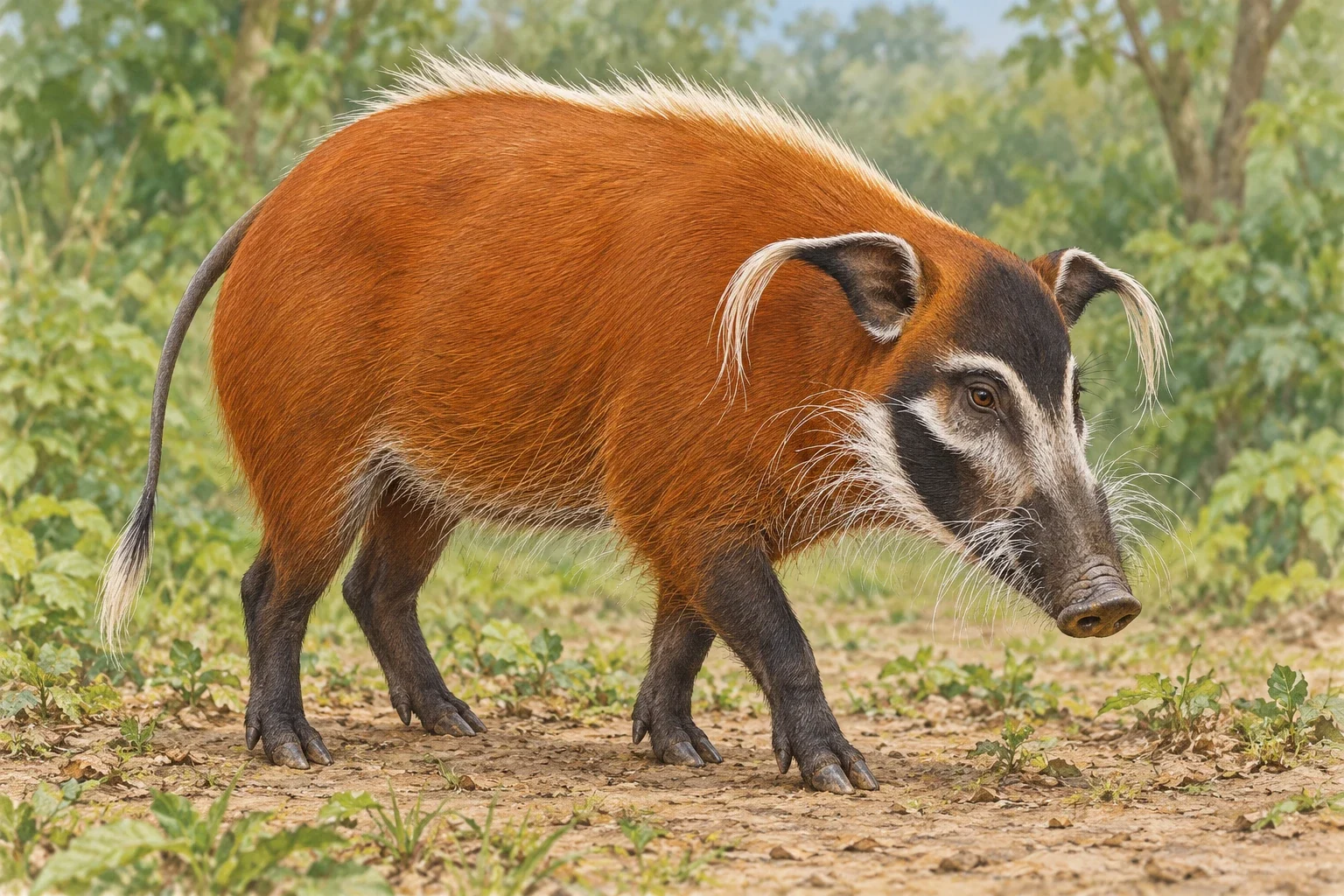
AI-generated natural-history study.
Interpretive illustration; no authenticated specimen claim.
Overview
The red river hog inhabits forests and nearby habitats in west and central Africa. Red-coated adults can have a pale stripe along the back, facial markings and white ear tufts. Its snout helps locate and uncover food through smell and touch. This omnivore eats plant material, invertebrates and other animal foods; feeding usually occurs at night, sometimes extending into shaded mornings and evenings.
Groups commonly contain up to a dozen animals, although solitary adults also occur. The Smithsonian account reports gestation of 120–130 days and litters of three to six. Females build grass nests, and both parents help protect the young. Scent glands and tusk marks communicate territorial presence.
Origins & earliest records
Potamochoerus porcus
Evidence & interpretation
Complete institutional accounts and native photographs inspected.
Selected bibliography
Documented works and useful reading. This is not a list of every appearance.
- 01
Family & connections
A source-supported family tree or inspiration record has not yet been compiled for this profile. Related reading below indicates a connection in subject matter, not a proven lineage or creative influence.
Look for a taxonomic record and classified relativesReferences
Sources supporting this profile. Linked pages have their own scope and editorial standards.
- Institutional species accountRed river hogResearch access: 2026-10-23
Image credits
AI-generated interpretive illustrationAI-generated natural-history study.
Interpretive illustration; no authenticated specimen claim.