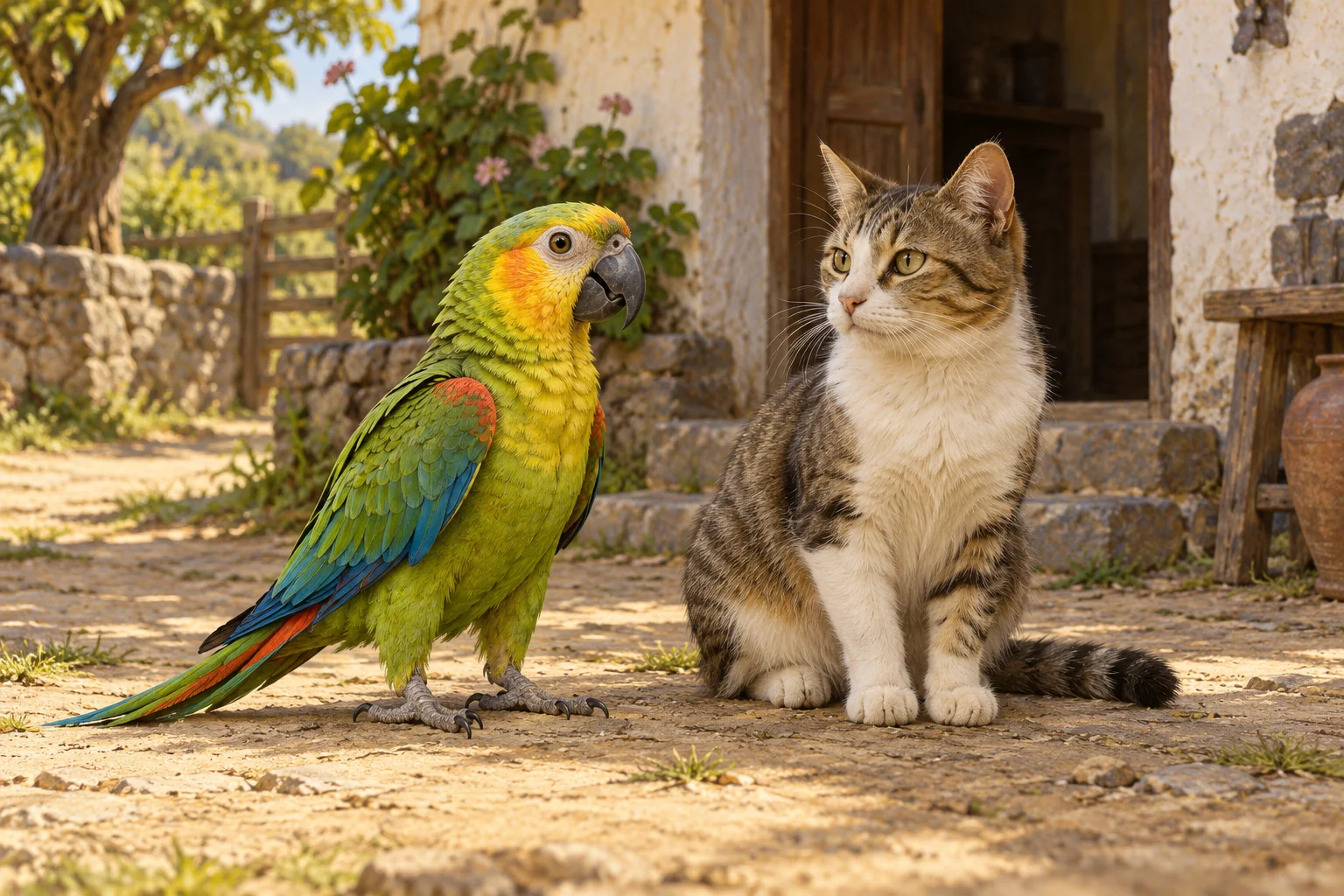
AI interpretation of José de Barros’s parrot and cat after their departure to a farmer’s house; species and colours unspecified.
Original AI interpretation of a particular Cape Verdean diaspora witness. Animal species, colours, scale, clothing, architecture and coast imagined; no authenticated island iconography, wildlife record or current community practice claimed.
Overview
In The Parrot in Trouble, a merchant leaves his parrot guarding the door while he fries fish. The bird hears him quote a customer sixteen hundred reis a yard and remembers the amount. When another customer asks the price of bread, the parrot repeats sixteen hundred reis. A dispute follows when the merchant wants more payment, while the parrot keeps calling out the same figure. After the customer leaves, the angry merchant strikes the bird with a stick, and it escapes beneath a bed.
The merchant then discovers that his cat has eaten the fish in the kitchen. He strikes the cat with the same stick, driving it beneath the same bed. Frightened and still thinking about the price, the parrot asks whether the cat also said sixteen hundred reis. It proposes that they leave the merchant and live with someone else. Both animals depart and settle in the house of a farmer in the countryside. The printed footnote attributes the tale to José de Barros of Brava and says Gregorio Teixeira da Silva collected it; the preface also identifies this numbered tale as one Silva recorded directly. The parrot has no stated personal name, exact species or feather colour.
Origins & earliest records
José de Barros of Brava, collected by Gregorio Teixeira da Silva according to the tale’s footnote. The full collection’s New England recording context is not the fictional merchant’s address.
Records & interpretation
Part I, printed pp. 372–373, complete relevant English witness and attached notes. Source PDF checked directly; no independent Cape Verdean Creole translation claimed.
Selected bibliography
Documented works and useful reading. This is not a list of every appearance.
- 01
Folk-Lore from the Cape Verde Islands, Part I
Complete relevant English narrative, attached variant notes and full prefatory mediation retained.
Family & connections
A source-supported family tree or inspiration record has not yet been compiled for this profile. Related reading below indicates a connection in subject matter, not a proven lineage or creative influence.
References
Sources supporting this profile. Linked pages have their own scope and editorial standards.
- Original historical English collection and editorial variant notesParsons 1923, selected complete narrative context, pp. 372–373Research access: 2026-10-18
Image credits
AI-generatedAI interpretation of José de Barros’s parrot and cat after their departure to a farmer’s house; species and colours unspecified.
Original AI interpretation of a particular Cape Verdean diaspora witness. Animal species, colours, scale, clothing, architecture and coast imagined; no authenticated island iconography, wildlife record or current community practice claimed.