
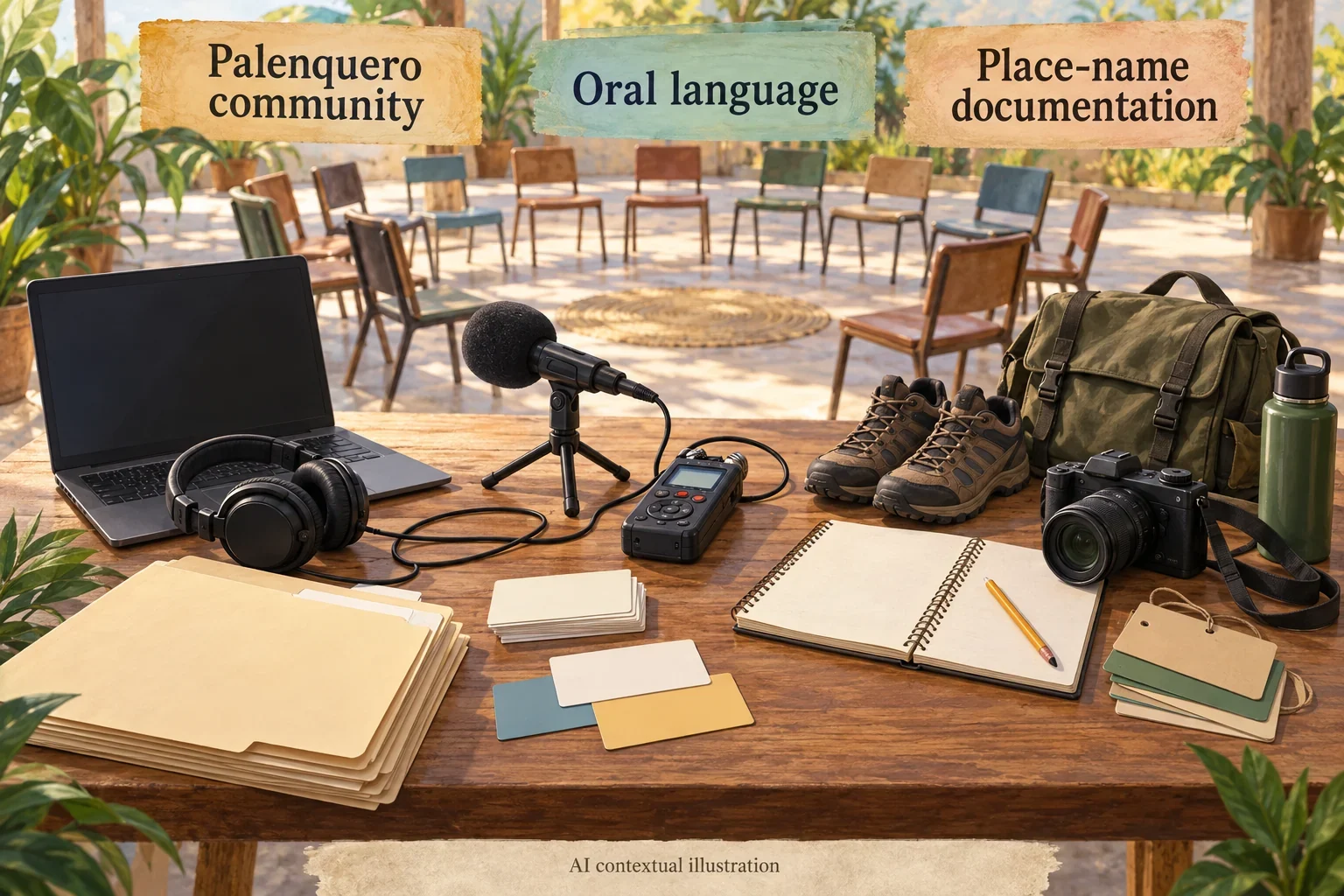
AI concept of Palenquero oral-language recording and participatory place-name documentation.
Setting, tools and layout imagined; not ethnographic evidence.
Overview
In the IGAC community collaboration, San Basilio de Palenque's contributors describe resistance to enslavement, Palenquero language and oral knowledge as foundations of identity. They seek language revitalisation through education. The April 2024 place-name expedition involved the Ma Kankamaná Community Council.
UNESCO's account connects San Basilio with seventeenth-century refuges founded by people escaping slavery. It describes family networks and age groups called ma kuagro, with reciprocal rights and duties. The cultural space was proclaimed in 2005 and entered the Representative List in 2008.
History & identity
Community testimony and a bounded UNESCO cultural-space account.
Sources & representation
Selected public institutional passages retained.
Selected bibliography
Documented works and useful reading. This is not a list of every appearance.
- 01
- 02
Language & cultural connections
Source-supported language and cultural connections have not yet been compiled for this profile.
References
Sources supporting this profile. Linked pages have their own scope and editorial standards.
- Community institutional accountExpedición San Basilio de PalenqueResearch access: 2026-10-11
- Community institutional accountCultural space of Palenque de San BasilioResearch access: 2026-10-11
Image credits
AI contextual interpretationAI concept of Palenquero oral-language recording and participatory place-name documentation.
Setting, tools and layout imagined; not ethnographic evidence.