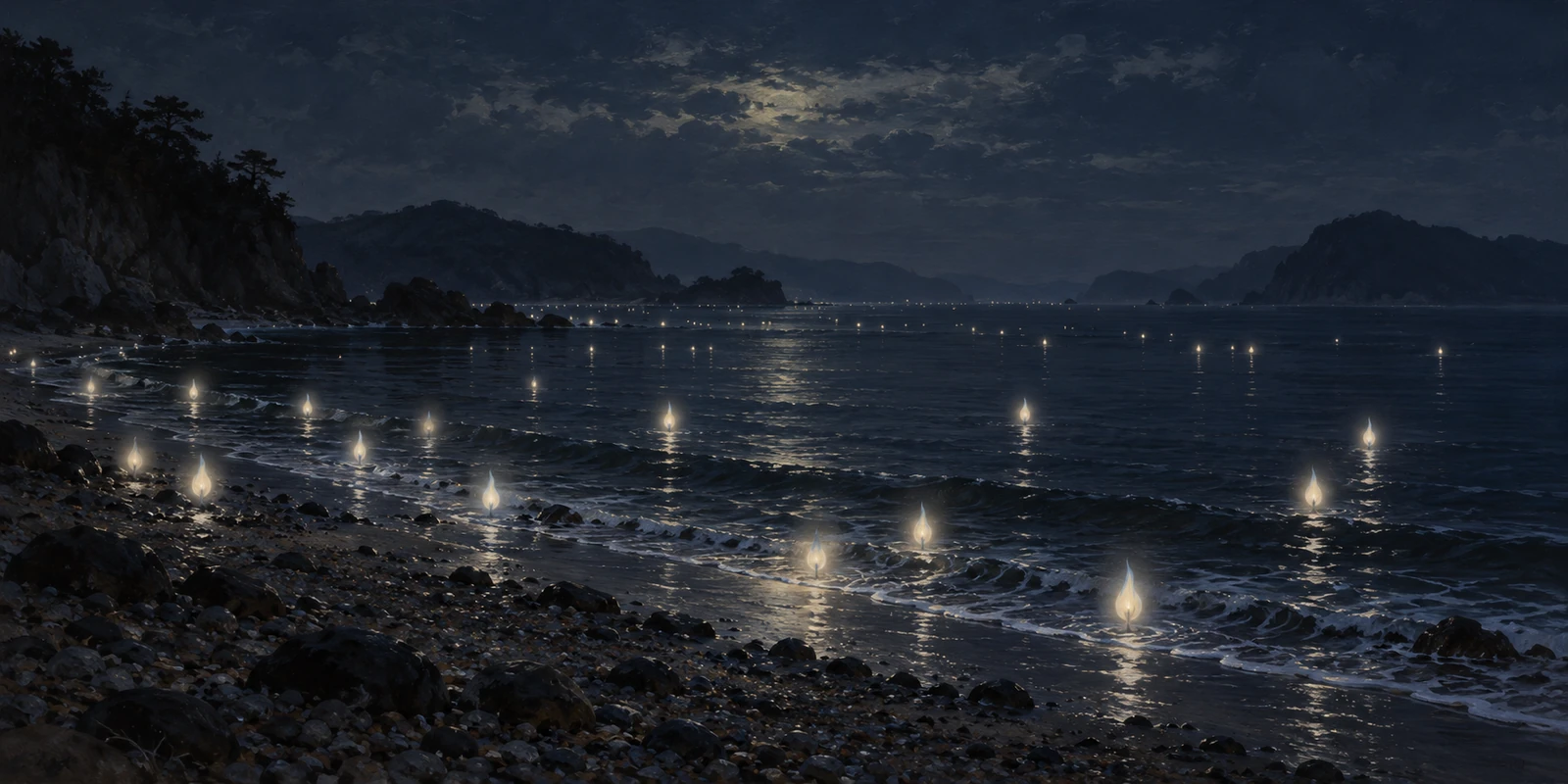
AI-generated interpretation of the pale coastal Oni-bi in Hearn’s Kwaidan. Shoreline, weather, light placement and colours are imagined; the image is neither a photograph of Dan-no-ura nor evidence of supernatural lights.
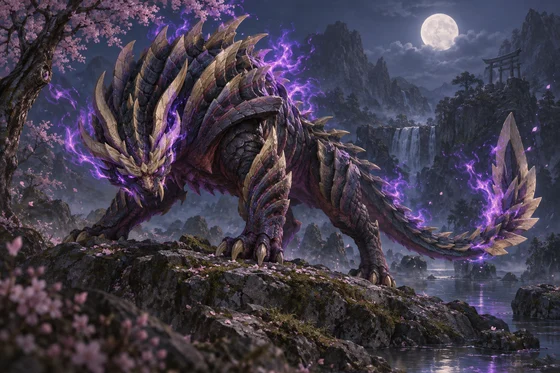
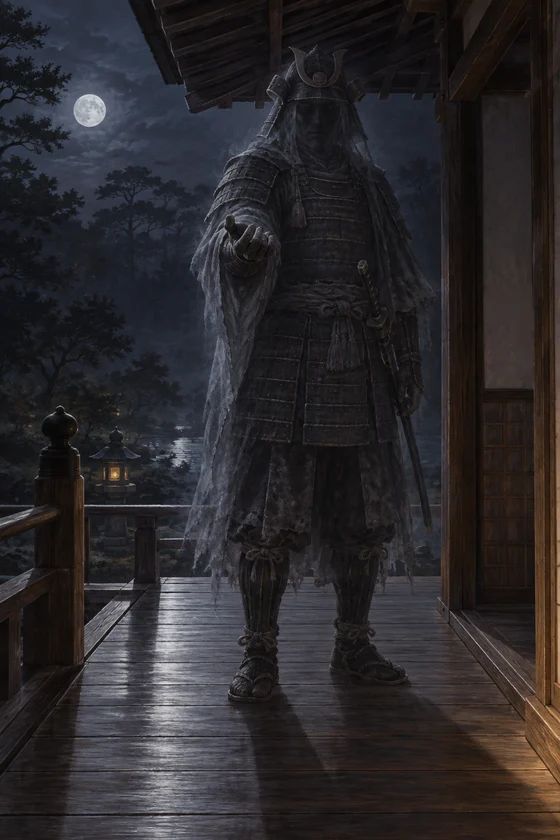
This depicts the historical literary light phenomenon, not Magnamalo, the ghost retainer, a fixed species anatomy or a reconstruction of an actual ritual.
Overview
Hearn opens his account of Mimi-nashi-Hōïchi with a haunted coastal landscape at Dan-no-ura. The Heiké dead are associated with the sea and shore after their defeat, including the deaths of women, children and the infant emperor. On dark nights, pale fires hover along the beach or move over the waves in their thousands. The fishermen’s name for these lights is Oni-bi, which Hearn renders as demon-fires. He also describes battle-like shouting when the wind rises; the sound and the visible lights remain distinguishable parts of the haunted setting.
The introduction connects the Heiké unrest with danger to passing ships and swimmers. A temple, cemetery monuments and Buddhist services are established to appease the dead, after which the disturbances diminish without completely disappearing. These actions belong to the wider account of the Heiké spirits. The text does not say that each individual light is a separate attacker or give every Oni-bi a human body. Its coastal fires are a visible phenomenon within that local narrative, rather than a physical species assembled from different Japanese traditions.
The lights return at the decisive discovery in Hōïchi’s story. A blind musician believes that he has been performing before a noble household whose members ask to hear the battle of Dan-no-ura. Temple servants sent to follow him instead hear his instrument in the cemetery. They find him alone in the rain before the memorial tomb of Antoku Tennō. Fires burn behind and around him and above the tombs, compared to candles, in an unprecedented host of Oni-bi. The difference between his perceived court and their visible cemetery makes the fires evidence of the audience’s ghostly setting within the tale.
The servants interrupt the performance and bring Hōïchi back to the temple. The priest identifies the supposed house as an illusion and explains that the summons came from the dead. Subsequent protective writing and the retainer’s final visit belong to Hōïchi’s danger and its resolution; they are not presented here as universal instructions for repelling every ghost-fire. The armoured messenger who summons him has a separate profile. Keeping that figure distinct preserves the difference between an acting character and the many lights surrounding the graves.
This account therefore supplies a specifically named use of Oni-bi in Hearn’s historical English literary retelling. It does not establish that all Japanese ghost-fires are Heiké spirits, that their appearance has one fixed colour beyond this passage’s pale light, or that an actual supernatural event has been verified. The coast, cemetery and performance give these fires their particular narrative role. Later fantasy imagery using the Onibi name can be compared with this witness without turning it into the demonstrated source of a modern design.
Origins & earliest records
Lafcadio Hearn’s Kwaidan supplies the selected historical English retelling. The work is dated 1904; this entry uses Project Gutenberg 1210’s historical text, not a collation with an identified physical 1904 imprint. The narrative is a situated literary witness, not an exhaustive survey of Japanese ghost-fire traditions.
Records & interpretation
The complete Mimi-nashi-Hōïchi narrative and all seven attached historical notes were read. Both explicit Oni-bi passages are retained with their coastal and cemetery contexts. The later ghost-retainer episode is distinguished from the light phenomenon; Hearn’s cited earlier books and the Japanese narrative source were not independently collated.
Selected bibliography
Documented works and useful reading. This is not a list of every appearance.
- 01
Kwaidan: Stories and Studies of Strange Things — The Story of Mimi-Nashi-Hōïchi
Complete selected story and historical notes 1–7; Project Gutenberg 1210 transcription. Physical print imprint not independently identified.
Family, evolution & connections
Magnamalo
Hearn calls the pale coastal lights and the candle-like fires above the Heiké tombs Oni-bi. This is one source-specific historical ghost-fire account placed beside a later fantasy design context labelled Onibi imagery. The comparison does not identify Hearn’s spirits with the game creature, explain its anatomy or mechanics, or demonstrate that its creators consulted Kwaidan.
References
Sources supporting this profile. Linked pages have their own scope and editorial standards.
- Primary historical literary retellingHearn, Kwaidan, complete Mimi-Nashi-Hōïchi account and historical notesResearch access: 2026-10-25
Image credits
Modern interpretation of a historical narrativeAI-generated interpretation of the pale coastal Oni-bi in Hearn’s Kwaidan. Shoreline, weather, light placement and colours are imagined; the image is neither a photograph of Dan-no-ura nor evidence of supernatural lights.
This depicts the historical literary light phenomenon, not Magnamalo, the ghost retainer, a fixed species anatomy or a reconstruction of an actual ritual.