
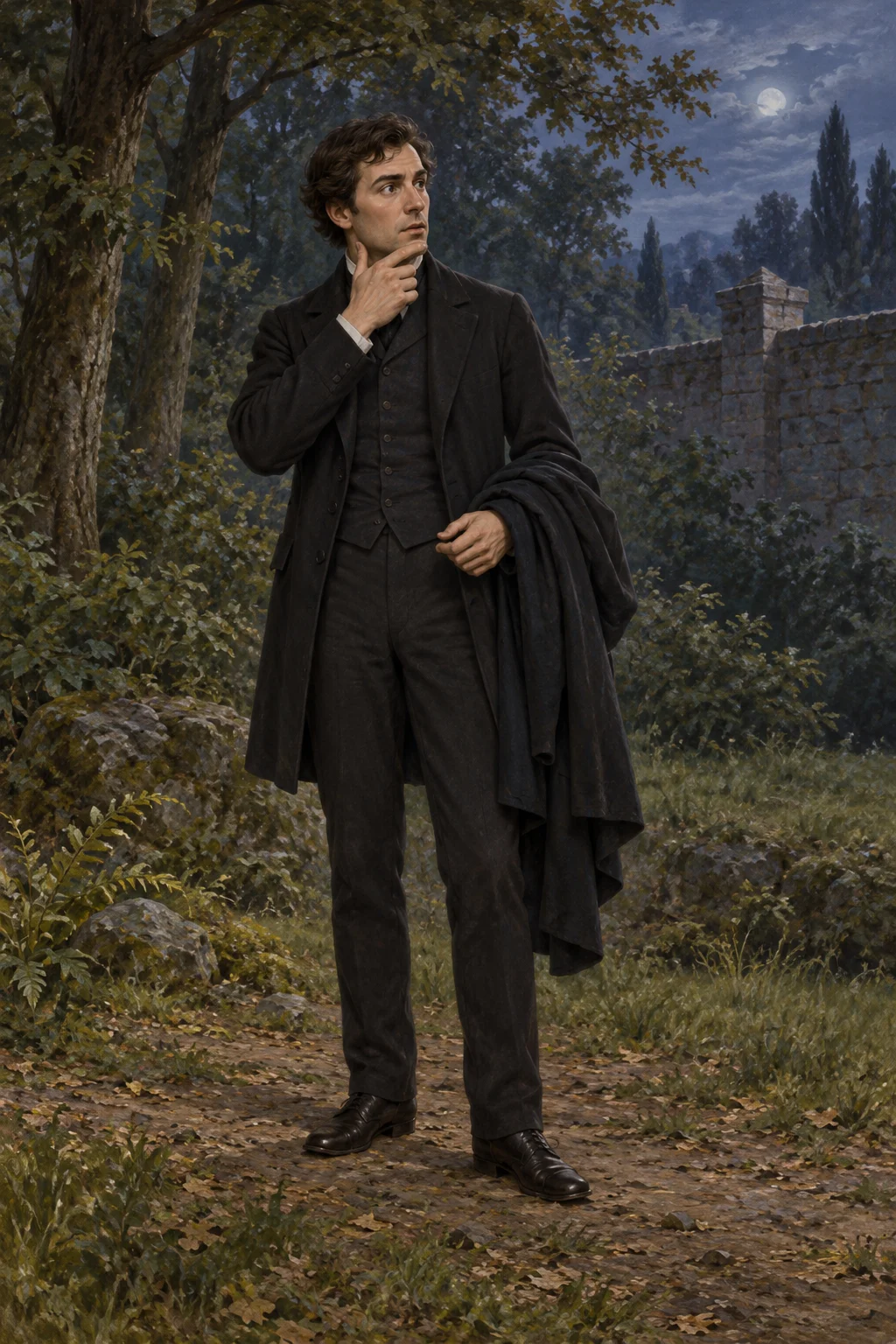
An imagined complete human Nuth, rubbing his chin and carrying a folded cloak.
Overview
The narrator presents Nuth as a consummate professional whose discretion makes advertising unnecessary. He supplies stolen pictures, tapestry and furniture to wealthy customers, charging first for delivery and later through blackmail. His apparent respectability is part of the joke: the narrator professes allegiance to Property while admiring his methods. Nuth occupies a house in Belgrave Square through an arrangement with its caretaker, who discourages prospective purchasers. When an old woman brings her awkward son Tonker to him, he accepts the young man as an apprentice after checking a jeweller’s reference. Tonker learns to move, open doors and climb silently; Nuth sends encouraging reports home in laborious handwriting. A successful theft at Lord Castlenorman’s house strengthens the apprentice’s pride and trust in his master.
Nuth then proposes stealing the enormous emeralds believed to ornament the gnoles’ house. Tonker objects but goes with him. They plan to carry two stones on a cloak, dropping one if their weight proves excessive, and Nuth warns that the jewels have little practical value until they are safely out of the wood. They take no firearms. At the tall house he sends Tonker up a ladder while remaining outside. The apprentice decides to withdraw, but the gnoles have watched through holes in tree trunks and seize him as he descends. The narrator refuses to describe what follows. Nuth watches with mild surprise, rubs his chin at the unfamiliar trick and slips away alone. The closing assurance that nobody catches Nuth completes a portrait of technical mastery without loyalty; the story neither rescues Tonker nor describes the gnoles’ bodily form.
First appearances & development
Lord Dunsany’s authored English fantasy in The Book of Wonder. The retained title and complete selected tale establish authorship and narrative scope; the consulted electronic body does not identify its exact historical print edition.
Canon & continuity
The complete twenty-one-paragraph tale supplies the professional framing, apprenticeship, expedition, capture and final escape. The narrator’s praise is satirical, and the ending leaves the apprentice’s subsequent treatment unstated.
Selected bibliography
Documented works and useful reading. This is not a list of every appearance.
- 01
Family & connections
A source-supported family tree or inspiration record has not yet been compiled for this profile. Related reading below indicates a connection in subject matter, not a proven lineage or creative influence.
References
Sources supporting this profile. Linked pages have their own scope and editorial standards.
- Primary historical authored fictionThe Book of Wonder — complete selected tale and framingResearch access: 2026-10-18
- Bibliographic search evidence onlyNational Library of Ireland catalogue search witness; direct record access heldResearch access: 2026-10-18
Image credits
AI-generatedAn imagined complete human Nuth, rubbing his chin and carrying a folded cloak.