
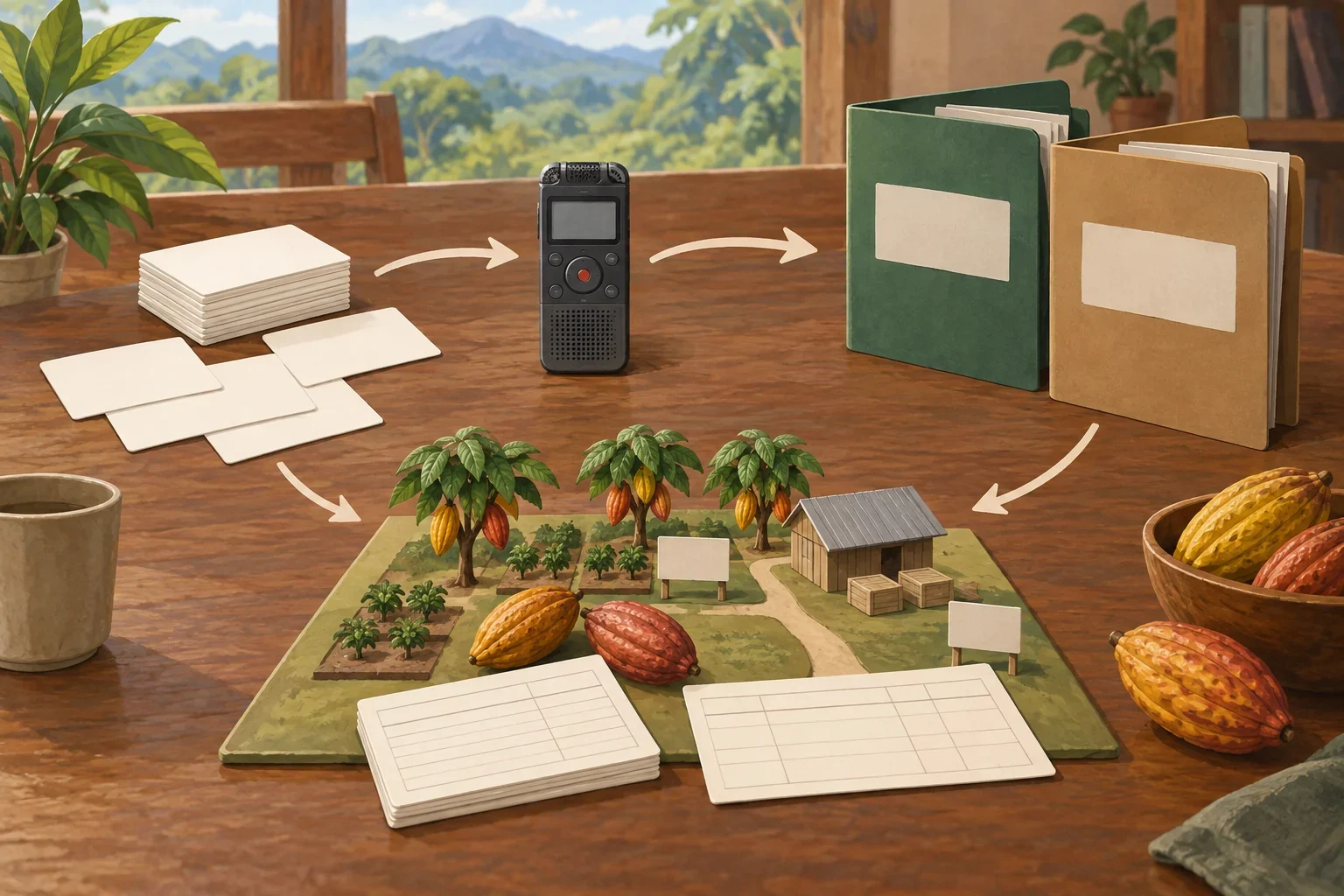
Imagined intergenerational learning and community planning connections.
Setting, tools and layout imagined; not ethnographic evidence.
Overview
Carlos Sánchez Avendaño’s DIPALICORI account places Ngäbere speakers in several Puntarenas cantons and describes the language’s Chibchan affiliation. It contrasts strong vitality in Panama with variation between Costa Rican settlements. This cross-border linguistic context concerns living Ngäbe communities, whose language use and circumstances differ; a national border does not define a single cultural identity.
A 2024 University of Costa Rica report describes educational exchanges with Ngäbe communities and political organising for improved services. Its discussion of Abrojo Montezuma highlights women’s leadership in a cacao-production association. Intergenerational learning and contemporary decision-making belong together in this account; the selected local examples should not become universal gender roles or a claim that cultural change erases identity.
History & identity
Living communities through selected Costa Rican university accounts.
Sources & representation
Selected public institutional passages retained.
Selected bibliography
Documented works and useful reading. This is not a list of every appearance.
- 01
- 02
Language & cultural connections
Source-supported language and cultural connections have not yet been compiled for this profile.
References
Sources supporting this profile. Linked pages have their own scope and editorial standards.
- University linguistic accountNgäbere language and cultureResearch access: 2026-10-11
- University community-reporting accountNgäbe living cultural heritageResearch access: 2026-10-11
Image credits
AI contextual interpretationImagined intergenerational learning and community planning connections.
Setting, tools and layout imagined; not ethnographic evidence.