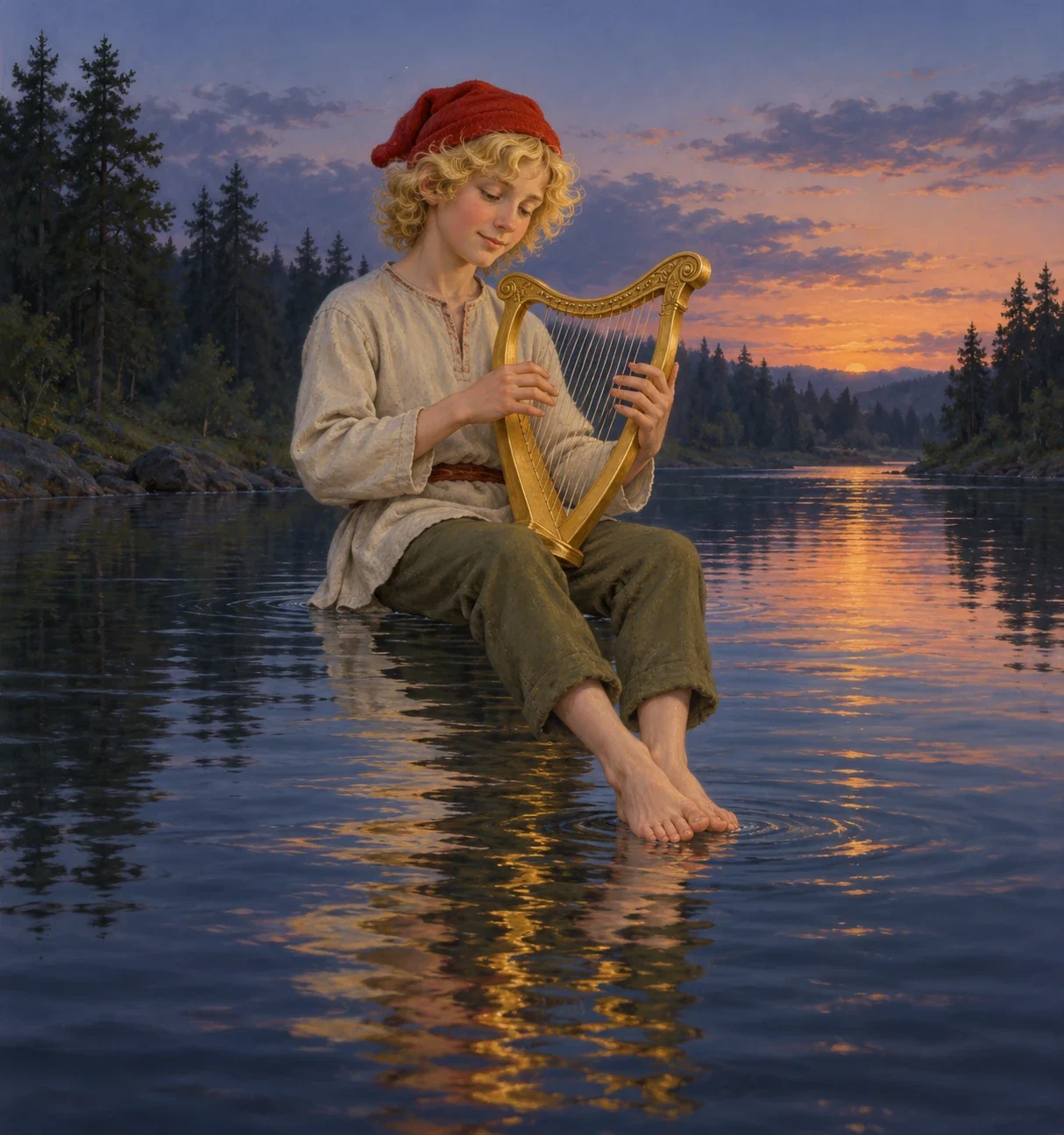
AI-generated interpretation of the boy-like Neck and gold-harp motif in Keightley; clothing, exact face, harp construction and setting imagined.
Specified boy-like Neck form combined with the account’s general gold-harp motif. Clothing, face, harp construction and landscape are artistic interpretation. Other forms and neighbouring traditions remain separate; no game artwork used.
Overview
Keightley’s 1892 Fairy Mythology presents the Neck as a river-spirit in a discussion of northern European traditions. The selected Swedish accounts emphasize music, feeling and encounters at the water rather than one settled monster anatomy. His introduction describes supernatural beings assigned to different places and discusses their possible salvation. These are the compiler’s reports and interpretations, not a claim that every northern community held identical beliefs or that the described beings actually inhabited the rivers.
The Neck’s appearances are expressly alternatives. On summer nights he may sit on the water like a small boy with golden ringlets and a red cap. Another description gives him a handsome young man’s upper body and a horse-like form below the surface. A third makes him an old man wringing water from a long beard while seated on cliffs; a note also reports a complete horse form. These descriptions should not be combined into a single body. Keightley describes protective use of steel and prints a Norwegian charm, but the historical account does not make those practices present-day safety advice.
His gold harp affects nature, and the account makes teaching music depend on an offering and a promise of redemption. A complete Swedish story gives this religious concern a personal voice. Two boys tell the playing Neck that he will never be saved; he throws away his harp and weeps. Their father, a parish priest, sends them back with consolation. The spirit then resumes playing sweetly. Keightley also gives a separate priest-and-flowering-cane version. The nearby Danish hill-dwarf story concerns different beings and is not silently turned into another Neck encounter.
The Power of the Harp presents a more threatening encounter. Kerstin fears drowning on her wedding day, as her two sisters have drowned before her. Her escort is distracted, her horse stumbles at the bridge and she falls into the stream. Sir Peter’s harp first makes the Neck laugh, then weep, and finally brings Kerstin back; the ending also has the Neck emerge carrying a maiden on each arm. Keightley identifies the ballad with West Gothland and Vermland. His note distinguishes the Danish Nökke and says comparable Danish ballads assign the role to a Havmand. He separately introduces the Strömkarl as a similar musician. Those distinctions remain visible here, and none proves that the Witcher’s burrowing Nekker derives its design from this particular account.
Origins & earliest records
Thomas Keightley, The Fairy Mythology, 1892 new revised and enlarged edition, London: George Bell & Sons. Complete Neck prose and The Power of the Harp, pp. 147–152, notes 206–210. English compilation with earlier-source mediation, not a verbatim field performance.
Records & interpretation
Complete selected prose, both Neck salvation stories, the contrasting hill-dwarf account, the entire ballad and notes 206–210 read in the retained historical text. Earlier works cited in those notes are not independently collated.
Selected bibliography
Documented works and useful reading. This is not a list of every appearance.
- 01
The Fairy Mythology: Necks, Mermen, and Mermaids; The Power of the Harp
Selected Neck prose and ballad pp. 147–152; notes 206–210. 1892 revised and enlarged edition as identified in retained title page.
Family, evolution & connections
Nekker (The Witcher)
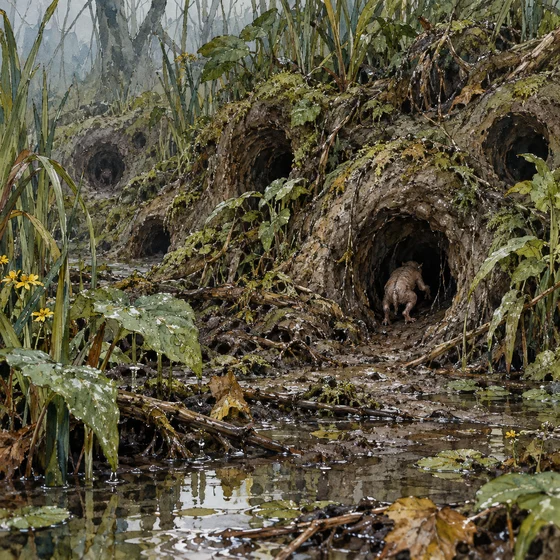
Nekkers are small, agile monsters whose strength lies in numbers and in the underground routes linking their colony. Keightley’s Swedish Neck accounts instead concern a musical river-spirit, with alternative appearances and stories about drowning, rescue and redemption. This is a cautious naming comparison between distinct portrayals, not evidence that the game’s colony monster or its design came from Keightley.
References
Sources supporting this profile. Linked pages have their own scope and editorial standards.
- Historical English compilation; complete selected accountsKeightley 1892, complete Neck accounts and ballad, pp. 147–152, notes 206–210Research access: 2026-10-24
Image credits
AI-generated historical interpretationAI-generated interpretation of the boy-like Neck and gold-harp motif in Keightley; clothing, exact face, harp construction and setting imagined.
Specified boy-like Neck form combined with the account’s general gold-harp motif. Clothing, face, harp construction and landscape are artistic interpretation. Other forms and neighbouring traditions remain separate; no game artwork used.