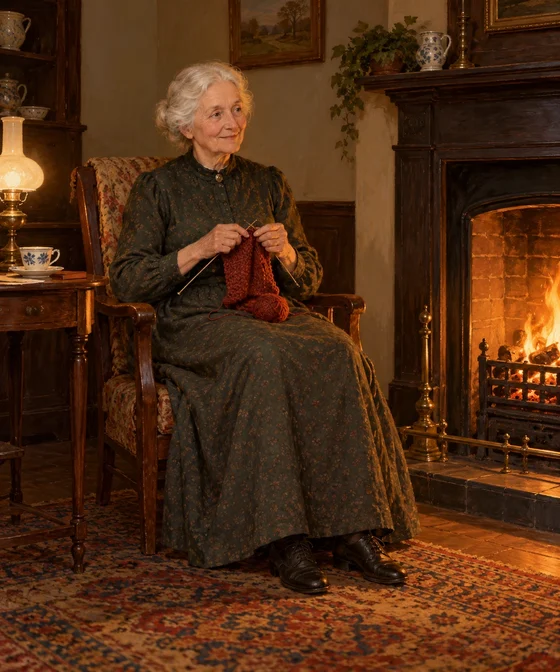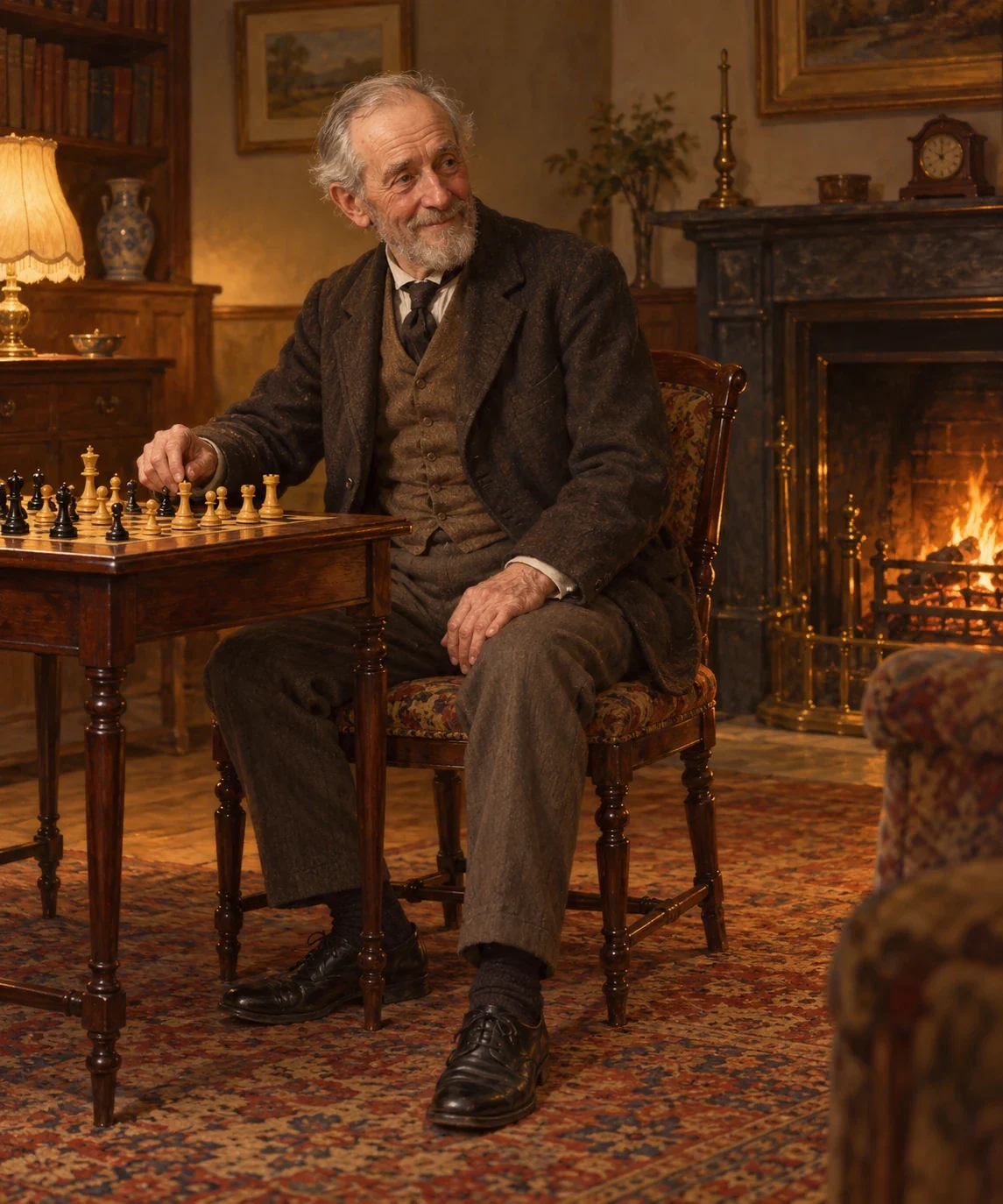
Original AI literary interpretation.
Overview
Mr. White is the elderly father in the small household at Laburnam Villa. He plays adventurous but unsuccessful chess against his son Herbert, complains theatrically about their remote road and hides a guilty grin in his thin grey beard when his wife and son exchange a knowing look. This affectionate, teasing opening establishes a family whose ordinary comforts precede the horror. Sergeant-Major Morris's tales of India awaken his curiosity, and he retrieves the dried monkey's paw when Morris tries to burn it, despite repeated warnings about its alleged powers.
At Herbert's suggestion he asks for two hundred pounds to clear the house, although he has just said that he already has everything he wants. He reports that the paw twists in his hand; his wife initially offers a natural explanation. The next day a company representative reports Herbert's fatal machinery accident and offers exactly two hundred pounds while denying liability. The match between wish and payment terrifies Mr. White, but the tale also articulates the possibility of coincidence. The factory death and compensation are reported within the story; the visitor does not establish a magical causal mechanism.
After the burial, Mrs. White insists that he use another wish to restore their son. He resists because of the body's condition, then wishes Herbert alive again. When knocking later begins, he desperately prevents his wife from opening the door and searches for the paw. He breathes a final wish whose words the narrator withholds. The knocking stops, and the opened door reveals an empty road. Neither an actual returned Herbert nor a supernatural creature is shown. His fear drives the last action, but the account does not disclose the final wish or independently authenticate Morris's history of the talisman. The Indian holy man's story is Morris's mediated claim, not documented religious or community evidence.
First appearances & development
Individual in W. W. Jacobs’s authored English supernatural fiction; Morris’s talisman history is character speech, not independent community or religious testimony.
Canon & continuity
Complete three-section tale: 148 numbered units including 3 section labels and 1 original illustration caption; retained title, author, dated heading, contents and caption list read.
Selected bibliography
Documented works and useful reading. This is not a list of every appearance.
- 01
The Lady of the Barge - The Monkey’s Paw
Year is the retained collection heading, not first appearance or independently verified physical edition. Native PDF locator inaccessible and held.
Family & connections
A source-supported family tree or inspiration record has not yet been compiled for this profile. Related reading below indicates a connection in subject matter, not a proven lineage or creative influence.
References
Sources supporting this profile. Linked pages have their own scope and editorial standards.
- Primary authored supernatural fictionThe Monkey’s Paw - complete authored English narrative in retained collectionResearch access: 2026-10-21
Image credits
AI-generated illustrationOriginal AI literary interpretation.