
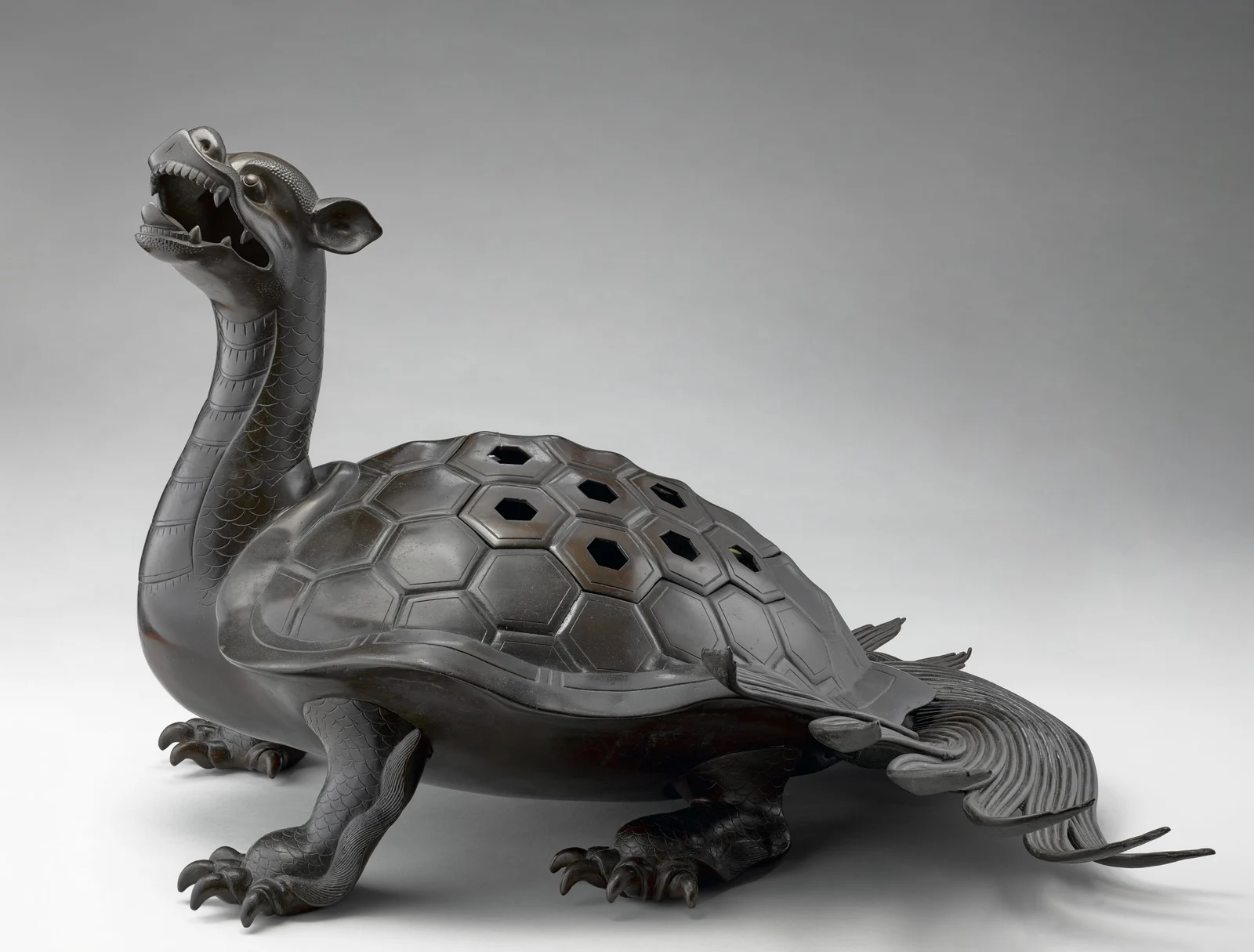
Dark bronze tortoise incense burner with a high upright neck, open toothed mouth, pointed ears, clawed feet, perforated hexagonal shell and a long curling tail shaped as flowing strands of algae.
This eighteenth–nineteenth-century Japanese burner depicts the long-lived minogame. The museum explains the long algae-covered tail as an allusion to time. Its ears, teeth and upright neck are this sculptor’s treatment; this is comparative minogame imagery, not Hearn’s own illustration.
Overview
In the1894 essay “In a Japanese Garden,” Hearn describes the minogame as the tortoise familiar in paintings and metalwork with a peculiar tail, or several little tails, trailing like the fringe of a straw raincoat. He connects its name with mino, the raincoat, and places it within the use of tortoises as signs of longevity. The thousand-year lifespan he mentions belongs to reported belief, not a measured lifespan for a zoological species.
Hearn offers a naturalistic explanation for the image: plants attached to the shells of old tortoises in temple tanks trail behind them as they move, and artists’ attempts to depict that appearance supposedly produced the minogame form. He presents this as an explanation of the tradition, not a demonstrated history of its invention. Nearby claims that a sea turtle can breathe out fog or a palace concern turtle lore more generally and are not explicitly assigned to this named minogame. No individual minogame encounter is narrated.
Origins & earliest records
Japanese traditions as selected and mediated in Lafcadio Hearn’s1894 garden essay.
Records & interpretation
Complete essay and allforty attached notes read; source-specific narrative and qualifications retained.
Selected bibliography
Documented works and useful reading. This is not a list of every appearance.
- 01
Glimpses of Unfamiliar Japan, Second Series — In a Japanese Garden
HostedI/originalXVI: all14sections and40endnotes read; particular section identified in evidence.
Family & connections
A source-supported family tree or inspiration record has not yet been compiled for this profile. Related reading below indicates a connection in subject matter, not a proven lineage or creative influence.
Primary records and illustrations
Glimpses of Unfamiliar Japan, Second Series — In a Japanese Garden
SecondSeries hostedI/originalXVI. Section9 andnotes24–25; wholechapter
Full62,187-character chapter plus9,081-character notes read. No invented narrator attribution. Cache hearn-glimpses2-garden.txt.
References
Sources supporting this profile. Linked pages have their own scope and editorial standards.
- Historical English essay, reported beliefs and literary narrativesHearn, complete In a Japanese GardenResearch access: 2026-10-05
Image credits
Historical Japanese minogame decorative sculptureDark bronze tortoise incense burner with a high upright neck, open toothed mouth, pointed ears, clawed feet, perforated hexagonal shell and a long curling tail shaped as flowing strands of algae.
This eighteenth–nineteenth-century Japanese burner depicts the long-lived minogame. The museum explains the long algae-covered tail as an allusion to time. Its ears, teeth and upright neck are this sculptor’s treatment; this is comparative minogame imagery, not Hearn’s own illustration.