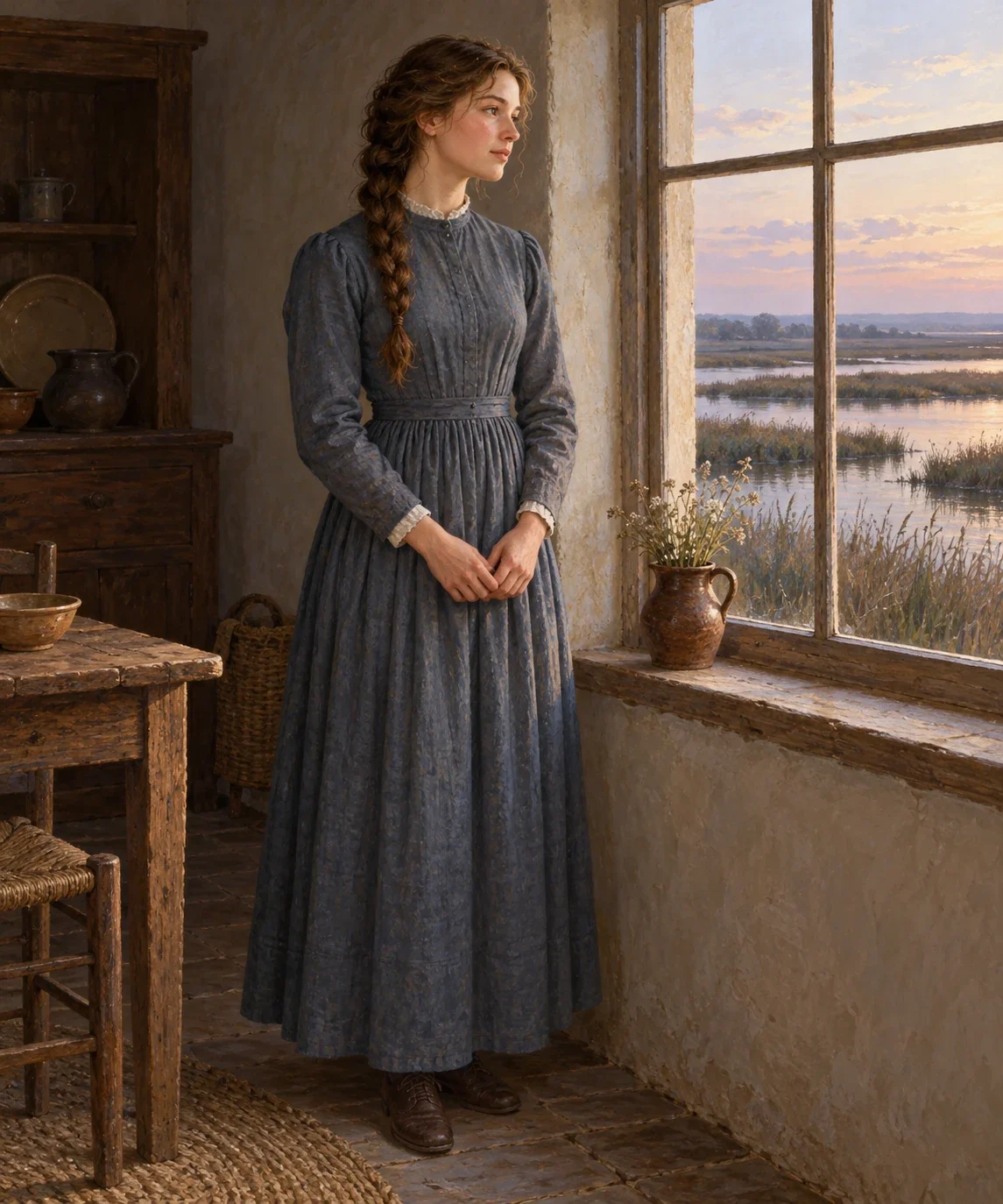
Original AI literary interpretation.
Overview
Mary Jane Rush begins as an unnamed little Wild Thing among the immortal kith of the Elf-folk. These beings are somewhat human in form, brown-skinned, barely two feet high and large of pointed ear, each accompanied by a marsh-light. They dance at night over reflected stars and ordinarily desire nothing beyond their marsh home. Hearing cathedral music and seeing worshippers, this individual longs for a soul that can understand beauty and imagine Paradise. Her companions fashion one from mist, gossamer, birdsong, memories and other elements of the marsh. They warn that accepting it will make her mortal, unable to enter Paradise with this made soul, and unable to regain immortality unless another accepts it.
She accepts the soul and becomes a young, beautiful human woman. A farmer's wife clothes her and braids her hair. Dean Murnith rejects the names she would choose and gives her Mary Jane Rush. Her delighted experience of music turns to loneliness when she declares love for the curate Mr. Millings and is sent to factory work in the Midlands. There she tends a spinning machine and finds industrial life devoid of the beauty her soul needs. A song of longing attracts a tenor's attention and brings her to London for an operatic career. Her managers replace her name again, with Signorina Maria Russiano. Success improves her circumstances without restoring freedom to live beside the marshes.
At her performance, her song awakens profound feelings in the audience, except for the socially distracted Lady Birmingham. Mary Jane offers the countess her soul, recognising a recipient who can accept it. When the countess finally places it against herself, the singer's human clothes collapse and the little Wild Thing escapes. She returns joyfully to East Anglia and dances with her kin. The narrator claims special dusk-born sight of the creatures; these are authored supernatural assertions, not reported local belief. The farmers' mistaken ethnic classification of the stranger is their prejudice, and the factory machines' monstrous descriptions are figurative. Her human and elfin states must not be combined into a single invented anatomy.
First appearances & development
Individual in Lord Dunsany’s authored English fantasy; supernatural and religious assertions belong to the tale, not community testimony or historical biography.
Canon & continuity
Complete 146-paragraph selected tale including its ending; original collection title, author line and dedication reused and read.
Selected bibliography
Documented works and useful reading. This is not a list of every appearance.
- 01
The Sword of Welleran and Other Stories - The Kith of the Elf-Folk
Retained original title and dedication lack a print year. Prior bounded edition locator failed to establish one; no release/access date substituted.
Family & connections
A source-supported family tree or inspiration record has not yet been compiled for this profile. Related reading below indicates a connection in subject matter, not a proven lineage or creative influence.
References
Sources supporting this profile. Linked pages have their own scope and editorial standards.
- Primary authored fantasyThe Kith of the Elf-Folk - complete authored English narrativeResearch access: 2026-10-21
Image credits
AI-generated illustrationOriginal AI literary interpretation.