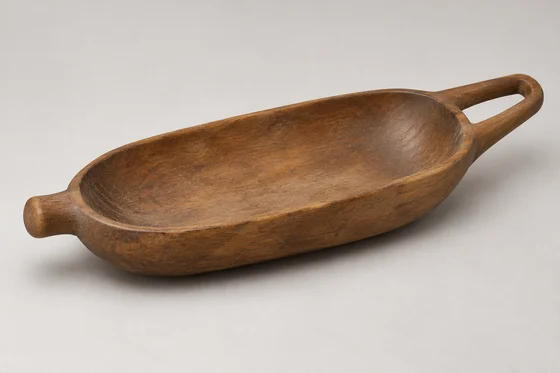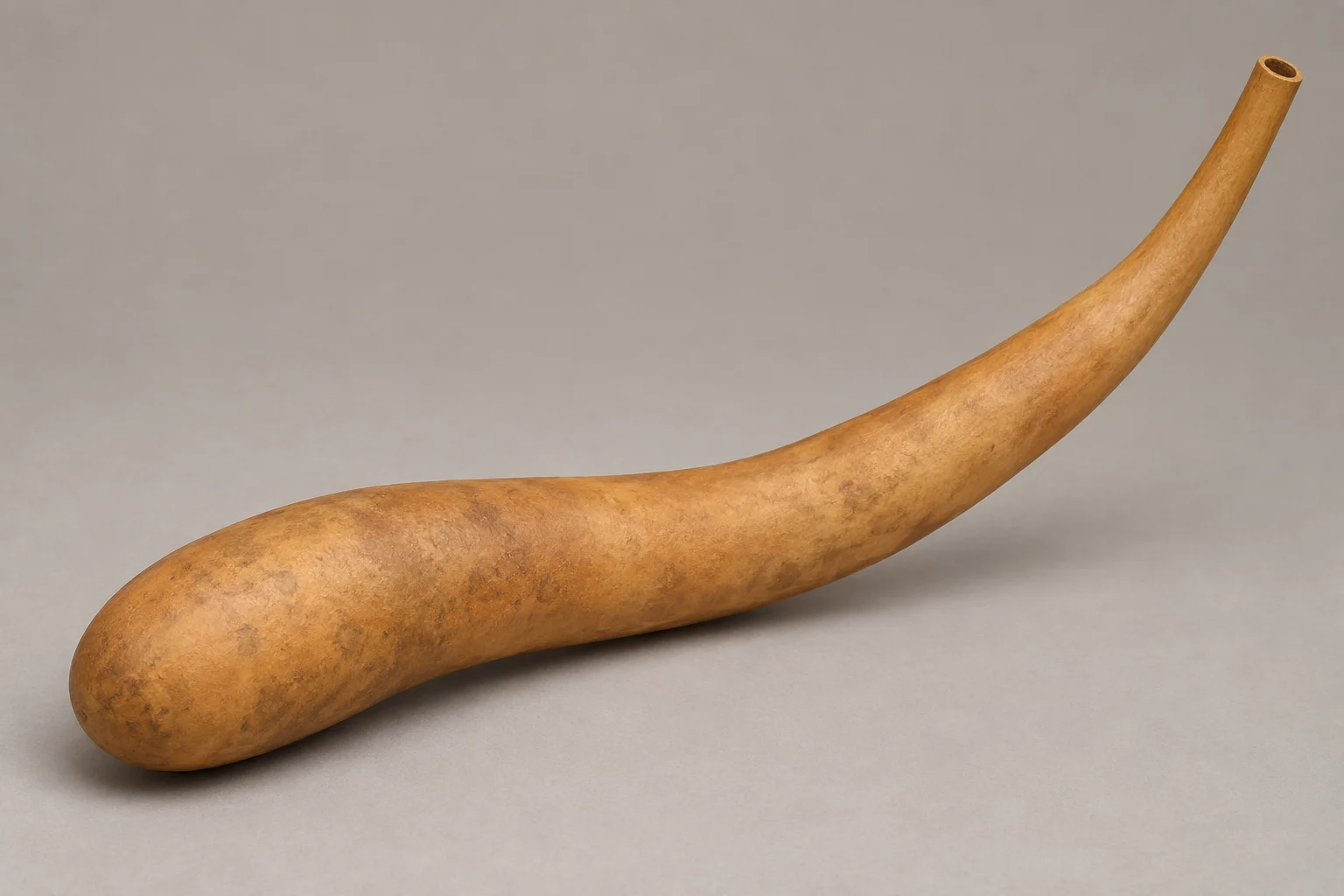
Generated interpretation of a published object; not a photographed specimen or authenticated replica. The lower body is broader than the form in the source plate.
Overview
Figures 2 and 3 of Plate 52 are captioned as water-carrying gourds. The left example bends sharply into a hook-like curve; the right is much longer and more gently crooked, narrowing gradually toward its upper opening. Both are shown without an attached carrying handle, stopper or applied ornament. Williamson calls these hollow pumpkins and distinguishes their commonly long, narrow shapes from the shorter, broader containers he knew in Mekeo and among Roro coastal people. He says that some examples reach about three feet in length, but does not assign that measurement to either photographed specimen. The source supplies no botanical species, capacity or named individual maker. A study of figure 3 can therefore retain its elongated taper and natural bend without converting it into a round bottle with a short neck.
The cooking account distinguishes storage and transport from heating: water is kept and carried in bamboo containers and hollow pumpkins, while boiling is done in sections of bamboo stem. The gourd should not be reconstructed as the vessel held in the fire. Water also appears as the ordinary drink in Williamson’s food discussion, giving the containers a practical place within his account of daily life. The regional comparison is his historical observation, not proof that every coastal or mountain community used a single standard form. His preface describes mission assistance, dependence on an interpreter and the possibility of misunderstanding, while his introductory geography acknowledges uncertainty beyond the neighbourhood he investigated. The monochrome plate records particular published forms; it does not establish their original colour, the details of an individual carrying journey, or continuing use in contemporary communities.
History & identity
Williamson’s historical fieldwork account, supported by mission interpreters and collection study.
Sources & representation
Complete preface, Haddon introduction, introductory chapter and daily-life chapter with notes read; complete native Plate52 inspected.
Selected bibliography
Documented works and useful reading. This is not a list of every appearance.
- 01
The Mafulu: Mountain People of British New Guinea
London:Macmillan and Co. 1910 expedition account; chapterIV,pp.67–69,Plate52. Introduction by A.C.Haddon.
Language & cultural connections
Source-supported language and cultural connections have not yet been compiled for this profile.
References
Sources supporting this profile. Linked pages have their own scope and editorial standards.
- Historical outsider fieldwork account with mission mediationWilliamson, original fieldwork narrative and Plate52Research access: 2026-10-18
Image credits
AI-generatedGenerated interpretation of a published object; not a photographed specimen or authenticated replica. The lower body is broader than the form in the source plate.