
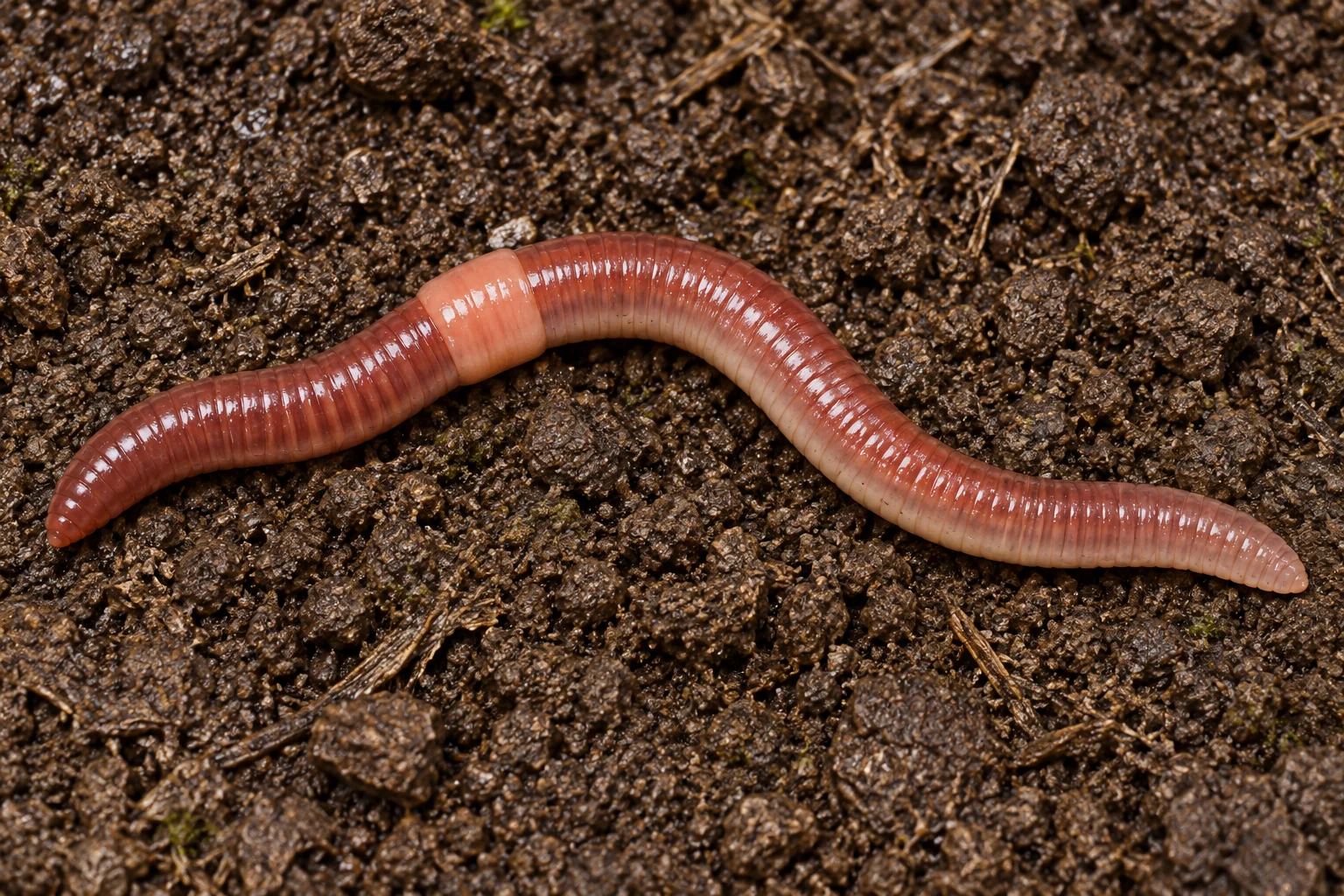
AI-generated whole exterior study.
Interpretation; microscopic identification is not claimed.
Overview
Common earthworms are long, segmented animals with a reddish-brown to purplish upper surface and a paler underside. The tail can broaden into a flattened paddle. NatureSpot describes them in undisturbed soil and lawns, where they occupy deep vertical burrows and emerge at night to collect fallen leaves.
Keiron Brown describes these burrows as permanent, mucus-lined homes that allow rapid retreat from predators. The worms gather leaves, twigs and other material into middens around their entrances. Adults have a fleshy reproductive band, the clitellum; mating partners exchange reproductive material, and young develop inside cocoons before hatching.
Origins & earliest records
Soil habitats
Evidence & interpretation
Published accounts.
Selected bibliography
Documented works and useful reading. This is not a list of every appearance.
- 01
- 02
Family & connections
A source-supported family tree or inspiration record has not yet been compiled for this profile. Related reading below indicates a connection in subject matter, not a proven lineage or creative influence.
Look for a taxonomic record and classified relativesReferences
Sources supporting this profile. Linked pages have their own scope and editorial standards.
- Community species accountCommon EarthwormResearch access: 2026-10-18
- Conservation charity expert accountThe secret life of the Common EarthwormResearch access: 2026-10-18
Image credits
AI-generated illustrationAI-generated whole exterior study.
Interpretation; microscopic identification is not claimed.