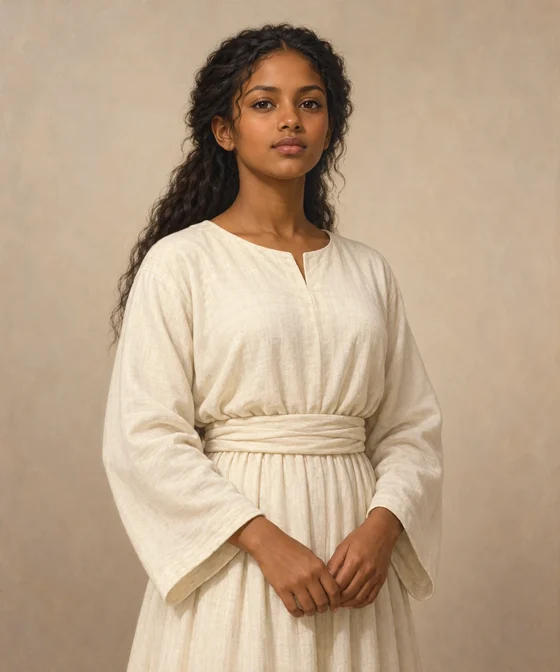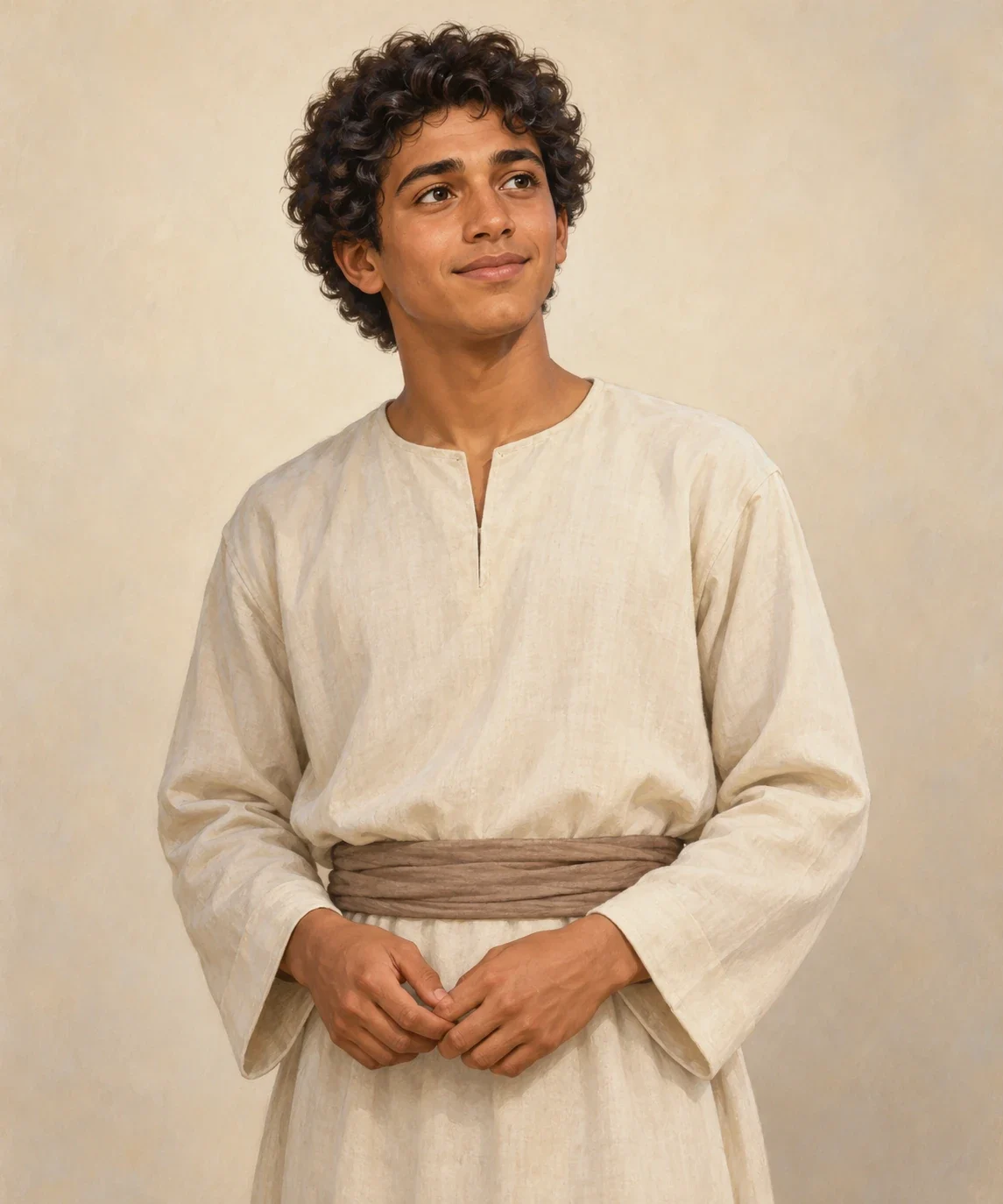
AI-generated interpretation of the historical narrative; individual appearance and clothing imagined.
Overview
The lion’s companion is the unnamed enslaved youth in Ibrahim Abdillah’s narrative 39, which Reinisch titles The Chaste Youth. One of a king’s two wives makes a sexual demand on him. He refuses, but she accuses him of making the proposal instead. The other wife denies receiving such a proposal and warns him to escape before the king kills him. He flees to a mountain cave near the city.
A lion enters the cave with a thorn in its paw. The youth removes the thorn, and the lion responds affectionately. It brings him an animal from the livestock grazing outside the city; he takes some meat and leaves the rest to the lion. They live together for three days. On the fourth day, soldiers trap the lion in a livestock enclosure. The youth is captured when he goes searching for it, and the king orders him thrown into the enclosure instead of the lion’s daily sheep.
The lion recognises his scent and licks him rather than eating him. The astonished king asks why he survived. The youth answers that a wild animal does not devour someone who has done no wrong, casting the reunion as vindication of his innocence. The king then assigns him the lion’s daily feeding and resumes his former support. Recognition, gratitude and the earlier act of care explain the animal’s behaviour within this particular tale; the youth remains unnamed.
Origins & earliest records
Ibrahim Abdillah’s oral contribution, recorded with German translation by Leo Reinisch in Die Somali-Sprache I: Texte (1900)
Records & interpretation
Complete bilingual narrative 39, pp. 145–148, including ending, read through Reinisch’s German translation; original Somali text retained. Full title and preface v–vi read; native selected opening/end pages inspected.
Selected bibliography
Documented works and useful reading. This is not a list of every appearance.
- 01
Die Somali-Sprache. I: Texte
Vienna: Alfred Hölder, 1900; Section II, narrative 39, pp. 145–148. Original edition and title page inspected.
Family & connections
A source-supported family tree or inspiration record has not yet been compiled for this profile. Related reading below indicates a connection in subject matter, not a proven lineage or creative influence.
References
Sources supporting this profile. Linked pages have their own scope and editorial standards.
- Digitized original historical bilingual publication; German translation readReinisch, Die Somali-Sprache I: Texte, narrative 39Research access: 2026-10-21
Image credits
AI-generated illustrationAI-generated interpretation of the historical narrative; individual appearance and clothing imagined.