
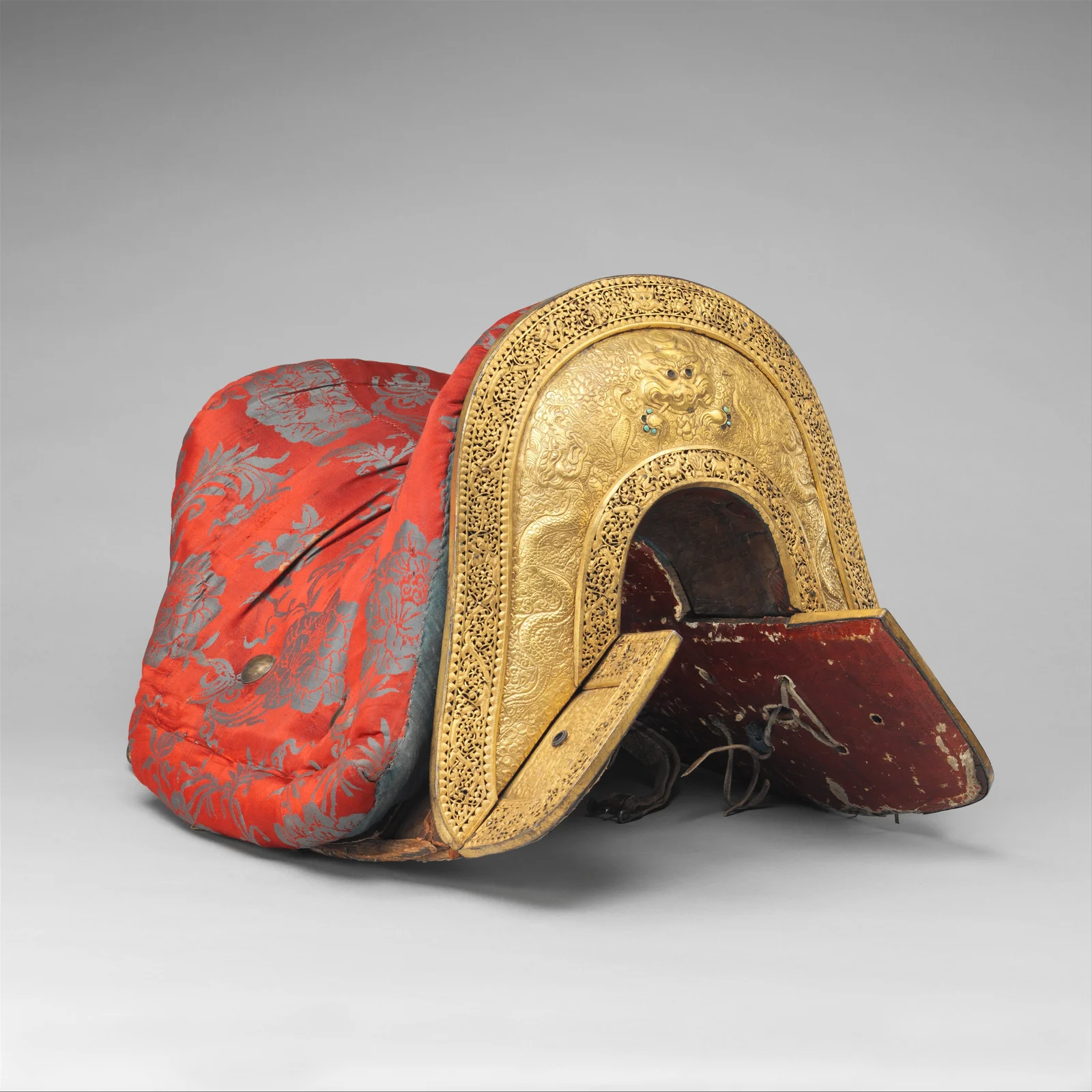
Kīrtimukha face on the gilt-copper plaque of a Tibetan saddle, eighteenth–nineteenth century
The fanged face occupies the centre of the saddle’s gilt-copper plaque, with another smaller face in the pierced upper border. The Met identifies these as Kīrtimukha motifs among the object’s protective religious ornaments. This photograph shows an artistic face motif on equestrian equipment rather than a living creature or a reconstructed body.
Overview
Kīrtimukha, the face of glory, is identified in the Rubin Museum’s terminology as a mask-like fanged beast face. Its placements include the upper portions of carved portals and throne backs, as well as rows on painted walls. This entry concerns an established iconographic being rather than a zoological animal.
A seventeenth-century Tibetan bone plaque in the Metropolitan Museum is explicitly identified as Kirtimukha and as part of a tantric ritual apron. A separately discussed nineteenth-century Nepalese pitcher places a kirtimukha below Durga; Katherine Anne Paul interprets it there through celestial waters. The motif’s particular object context and that curatorial interpretation are retained separately.
Origins & earliest records
South Asian and Himalayan religious iconography
Records & interpretation
Identified custodial object record and attributed interpretation read.
Selected bibliography
Documented works and useful reading. This is not a list of every appearance.
- 01
Plaque from a Tantric Ritual Apron: Kirtimukha
1991.409.5; object or collection date kept distinct from tradition origin.
- 02
Pitcher: Vessels as Containers of Potential
Specific contextual comparison; no inferred first attestation.
Family & connections
A source-supported family tree or inspiration record has not yet been compiled for this profile. Related reading below indicates a connection in subject matter, not a proven lineage or creative influence.
Primary records and illustrations
Plaque from a Tantric Ritual Apron: Kirtimukha
Identified museum collection. 1991.409.5
Identified custodial record read; image bytes have not been independently inspected for this row.
References
Sources supporting this profile. Linked pages have their own scope and editorial standards.
- Museum or custodial collection recordPlaque from a Tantric Ritual Apron: Kirtimukha — custodial recordResearch access: 2026-10-05
- Museum interpretive accountPitcher: Vessels as Containers of PotentialResearch access: 2026-10-05
Image credits
Historical decorative-object photographKīrtimukha face on the gilt-copper plaque of a Tibetan saddle, eighteenth–nineteenth century
The fanged face occupies the centre of the saddle’s gilt-copper plaque, with another smaller face in the pierced upper border. The Met identifies these as Kīrtimukha motifs among the object’s protective religious ornaments. This photograph shows an artistic face motif on equestrian equipment rather than a living creature or a reconstructed body.