AI-generated object interpretation.
Overview
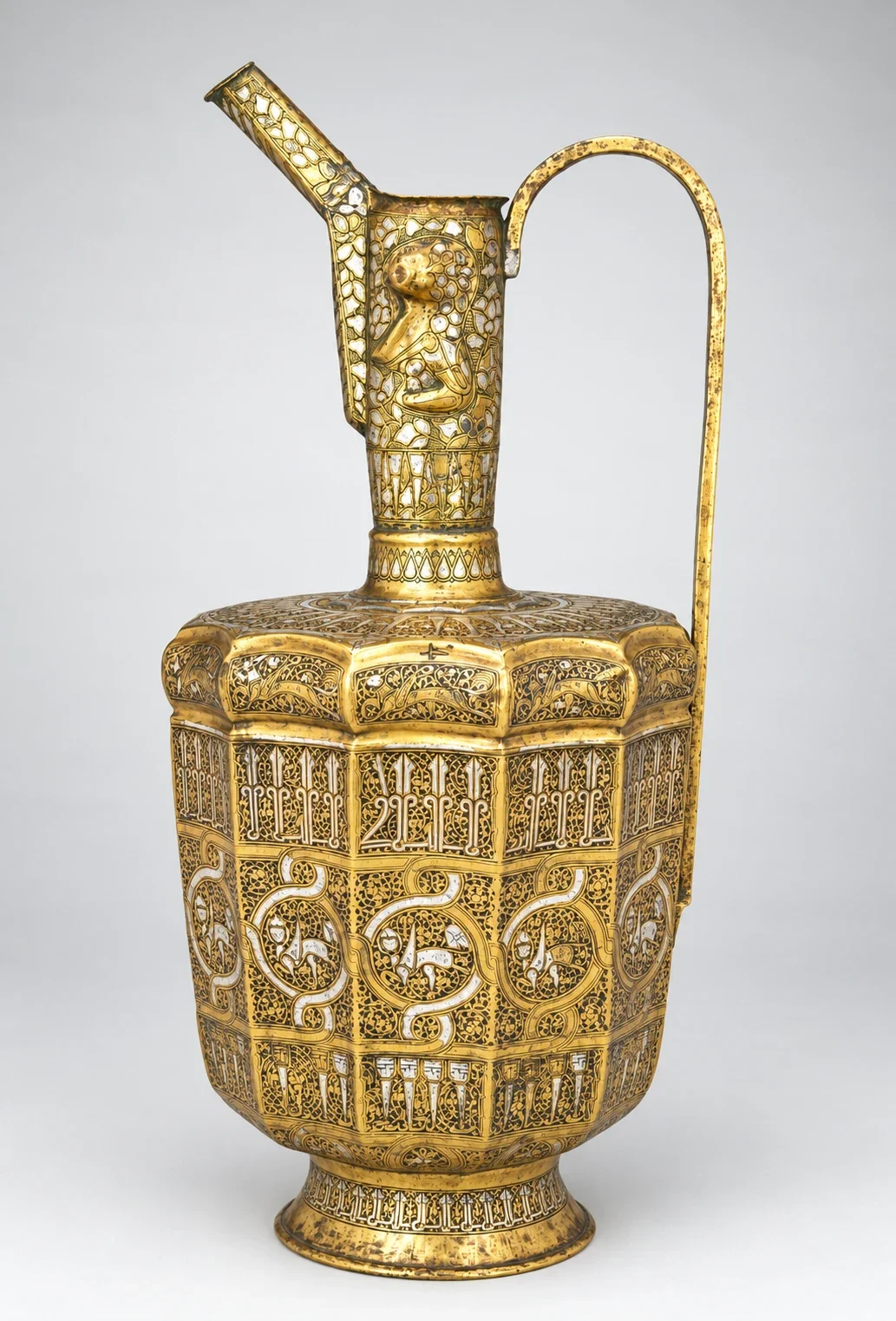
Cleveland attributes this twelve-sided brass ewer to Khurasan, Iran, in 1300–1350. Silver inlay accompanies relief lions, winged animals, sphinxes and human-headed calligraphy. The museum relates such vessels to court banquets and elite homes; this object’s original owner is unknown.
Hagop Kevorkian sold it to Cleveland in 1945. Earlier custody, maker and findspot are unrecorded.
History & identity
Maker unrecorded.
Sources & representation
Institutional object account.
Selected bibliography
Documented works and useful reading. This is not a list of every appearance.
- 01
Cleveland Museum of Art online catalogue: Twelve-sided Ewer with Sphinxes and Human-Headed Inscriptions (1945.27)
Undated online publication; manufacture date and record timestamps are separate.
Language & cultural connections
Source-supported language and cultural connections have not yet been compiled for this profile.
References
Sources supporting this profile. Linked pages have their own scope and editorial standards.
- Primary institutional object recordTwelve-sided Ewer with Sphinxes and Human-Headed Inscriptions — Cleveland Museum of Art 1945.27Research access: 2026-10-21
Image credits
AI-generated illustrationAI-generated object interpretation.