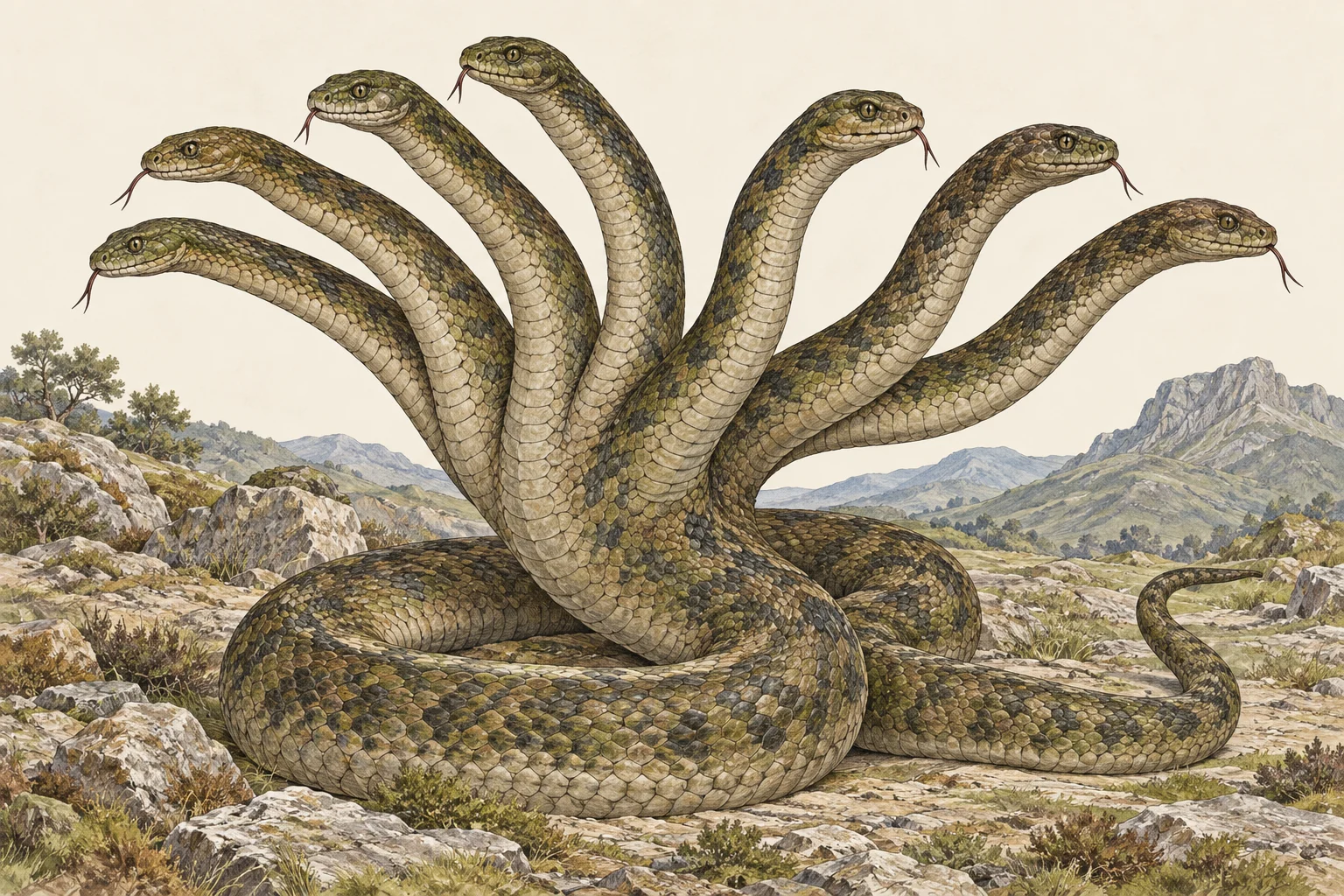
AI-generated interpretation of Heren-Suge: one coiled serpent with seven distinct heads and one tail in a rocky landscape.
Modern interpretation based on Webster’s Basque Legends, second edition (1879). Seven heads follow his introduction; the selected encounter confirms multiple heads and a tail. Colour, scales, neck arrangement and landscape are artistic choices. No fire is shown: the tale’s burning threat depends on obtaining a spark. This is new artwork, not a historical plate.
Overview
In Laurentine’s Grateful Tartaro and Heren-Suge, the king’s youngest daughter expects to be eaten by a serpent. The grateful Tartaro equips Petit Yorge to defend her. On the first day Yorge opens the seven doors of her carriage with his sword. The serpent anticipates eating rider, horse and princess, but Yorge and the horse each remove one head. It asks for quarter until the next day. A second horse and a new disguise accompany the second encounter, when another two heads are lost.
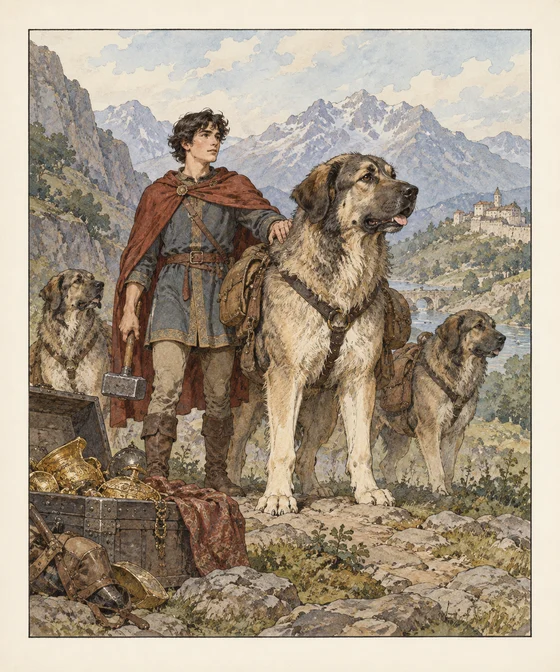
The last confrontation adds a formidable dog and scented water supplied by Tartaro. The serpent says that a spark between its head and tail would let it burn the four opponents. This is a conditional threat, not a narrated fire-breathing attack. The princess applies the water at the agreed signal; man, horse and dog each remove one remaining head. Yorge keeps all seven tongues, while a charcoal-burner later finds the discarded heads and claims the reward. The tongues and pieces cut from the princess’s dresses expose the false claim and identify the actual rescuer at the ending.
Origins & earliest records
Wentworth Webster, Basque Legends, second edition, London: Griffith and Farran, 1879, The Grateful Tartaro and the Heren-Suge, pp. 22–32. Laurentine
Records & interpretation
Located historical collected narrative and its attribution preserve this specific version. Webster’s solar interpretations and proposed ethnic etymologies are not adopted as facts.
Selected bibliography
Documented works and useful reading. This is not a list of every appearance.
- 01
Basque Legends: The Grateful Tartaro and the Heren-Suge, pp. 22–32
Title-page edition checked; complete selected account or explicitly identified summary read through its outcome.
Family & connections
A source-supported family tree or inspiration record has not yet been compiled for this profile. Related reading below indicates a connection in subject matter, not a proven lineage or creative influence.
References
Sources supporting this profile. Linked pages have their own scope and editorial standards.
- Primary historical collected narrativeWebster: Basque Legends, The Grateful Tartaro and the Heren-SugeResearch access: 2026-10-05
Image credits
AI-generated interpretationAI-generated interpretation of Heren-Suge: one coiled serpent with seven distinct heads and one tail in a rocky landscape.
Modern interpretation based on Webster’s Basque Legends, second edition (1879). Seven heads follow his introduction; the selected encounter confirms multiple heads and a tail. Colour, scales, neck arrangement and landscape are artistic choices. No fire is shown: the tale’s burning threat depends on obtaining a spark. This is new artwork, not a historical plate.