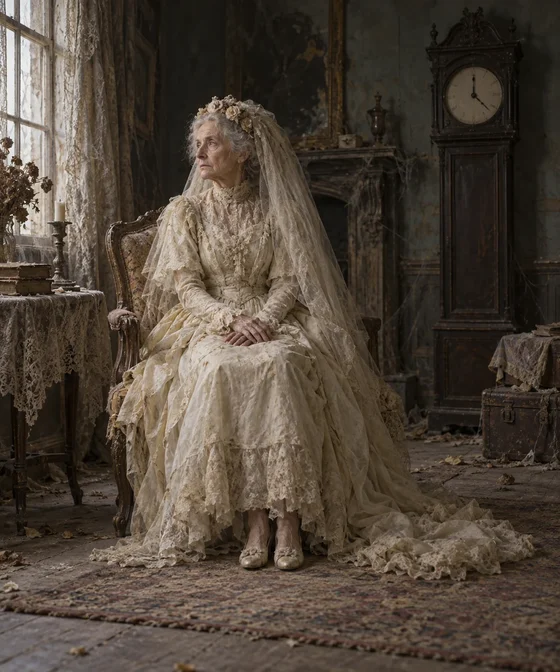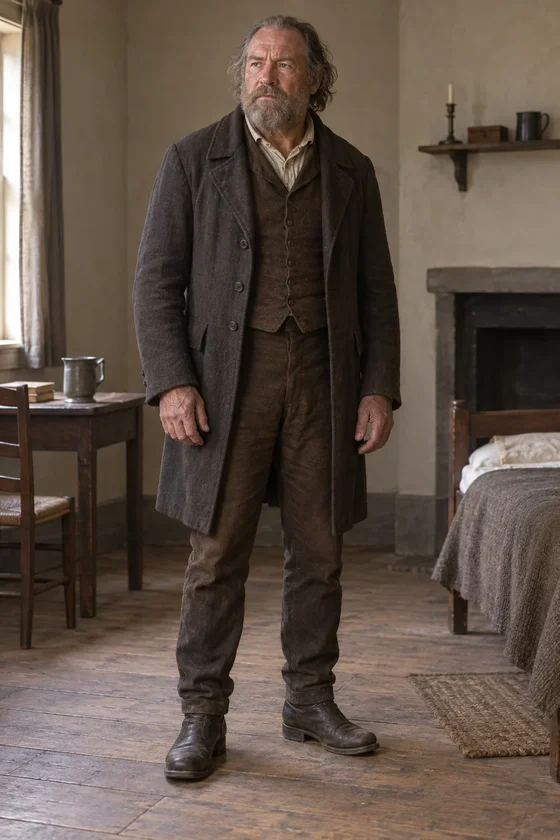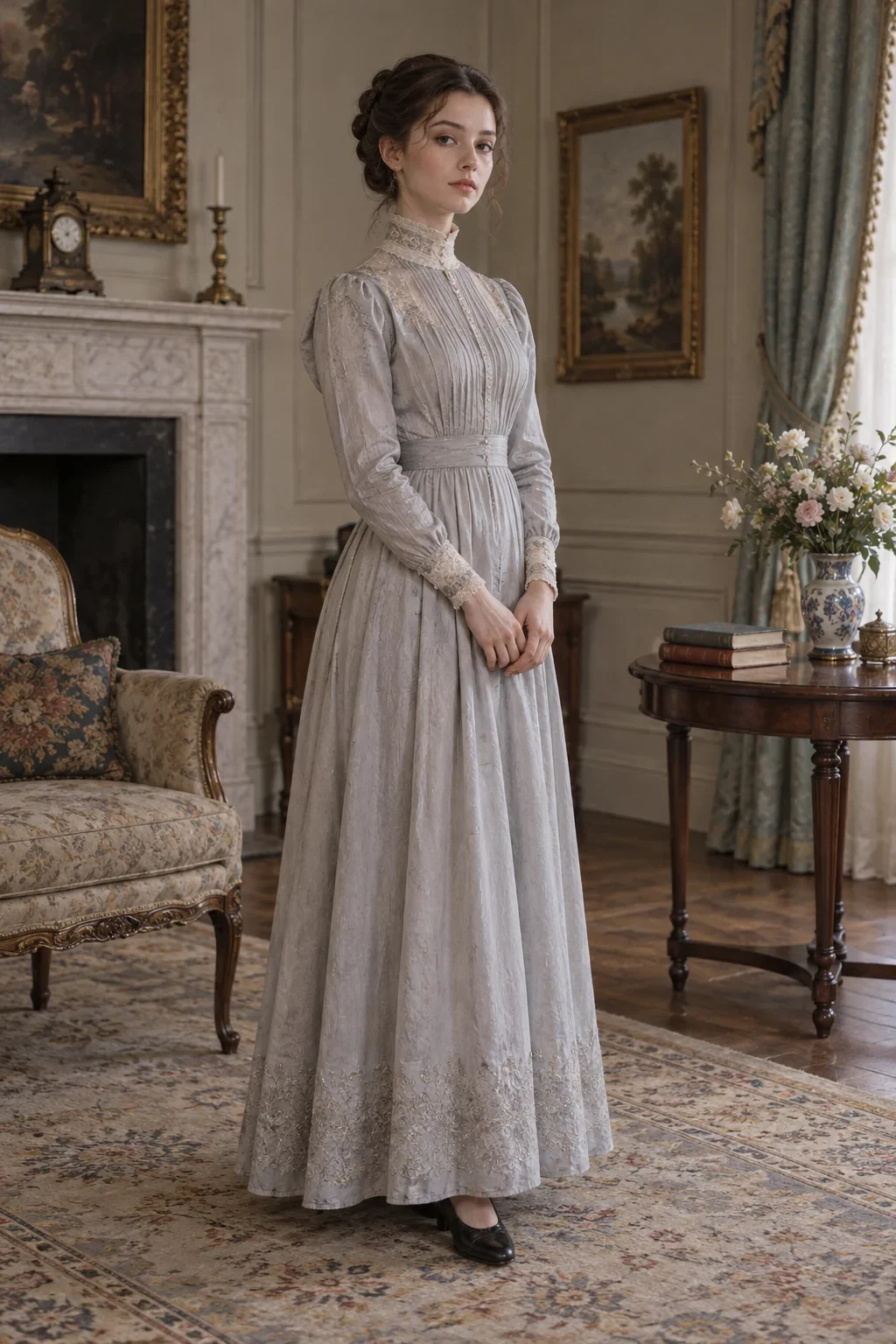
Imagined Estella in a quiet original-novel portrait.
Unofficial AI interpretation. Estella pauses during her young adult period. Selected object or posture follows the original novel; exact portrait, unmentioned clothing and scene arrangement are imagined, without an adaptation likeness claim. Full-frame display derivative; no upscaling.
Overview
Estella is the young woman whom Miss Havisham raises at Satis House and whom Pip loves in Great Expectations. She is introduced through Pip’s childhood visits, where her beauty and cultivated bearing are paired with contempt for his coarse hands and ordinary boots. These scenes matter because the narrator’s attraction is inseparable from the social shame she produces in him. Estella is not simply an ornament in his advancement story: she is a person trained within another woman’s grievance. Miss Havisham encourages her to wound men emotionally, turning the abandoned bride’s private injury into an education imposed on a child who did not cause it.
Estella repeatedly warns Pip against expecting the affectionate response he seeks. Her declarations about lacking a heart describe the emotional condition she believes her upbringing has produced, rather than a supernatural absence or an objective diagnosis. Pip hears the warning without relinquishing the hope that the secret arrangements around his fortune will eventually deliver her to him. Their meetings as young adults therefore combine intimacy of acquaintance with a persistent mismatch of expectation. Miss Havisham’s encouragement deepens that mismatch. Estella’s coldness is both a weapon cultivated by her guardian and a barrier she can identify with considerable clarity. The novel allows these positions to coexist without making her merely a willing agent of revenge.
When Estella confronts Miss Havisham, she argues that the woman who shaped her should not demand a tenderness she never taught. This exchange makes their adoptive relationship more complicated than gratitude or obedience. Estella later chooses Bentley Drummle as her husband despite Pip’s devotion and objections. Her choice is not proof that she secretly prefers Pip or that Pip’s anticipated fortune gives him a claim on her. The resulting marriage is unhappy, and the narrative’s later information associates Drummle with harsh treatment. Separately, Pip’s investigation establishes that Estella’s biological parents are Magwitch and Molly. Jaggers’s intervention placed the child with Miss Havisham; Estella herself is not shown conducting this investigation or sharing Pip’s discoveries.
At the final meeting retained by this edition, Estella has changed through suffering and speaks with a humility Pip did not hear in their early encounters. They meet among the remains of the house that organized so much of their earlier relationship. She asks that they be friends, and Pip’s closing perception suggests an opening beyond their previous separations. That ending remains suggestive: this profile does not supply a wedding, children or later domestic events that the selected text does not record. Related links distinguish Pip’s long attachment, Miss Havisham’s formative guardianship and Magwitch’s biological fatherhood. Exact appearance beyond narrative details, modern psychological labels and screen portrayals are outside this original-novel identity.
First appearances & development
Charles Dickens establishes this character through recollections, concealed family history and changing expectations in Great Expectations. This profile follows the original narrative without adaptation continuity.
Canon & continuity
Original narrative.
Selected bibliography
Documented works and useful reading. This is not a list of every appearance.
- 01
Great Expectations
Original.
Family & connections
A source-supported family tree or inspiration record has not yet been compiled for this profile. Related reading below indicates a connection in subject matter, not a proven lineage or creative influence.
References
Sources supporting this profile. Linked pages have their own scope and editorial standards.
- PrimaryGreat ExpectationsResearch access: 2026-10-12
Image credits
Unofficial modern AI interpretationImagined Estella in a quiet original-novel portrait.
Unofficial AI interpretation. Estella pauses during her young adult period. Selected object or posture follows the original novel; exact portrait, unmentioned clothing and scene arrangement are imagined, without an adaptation likeness claim. Full-frame display derivative; no upscaling.