
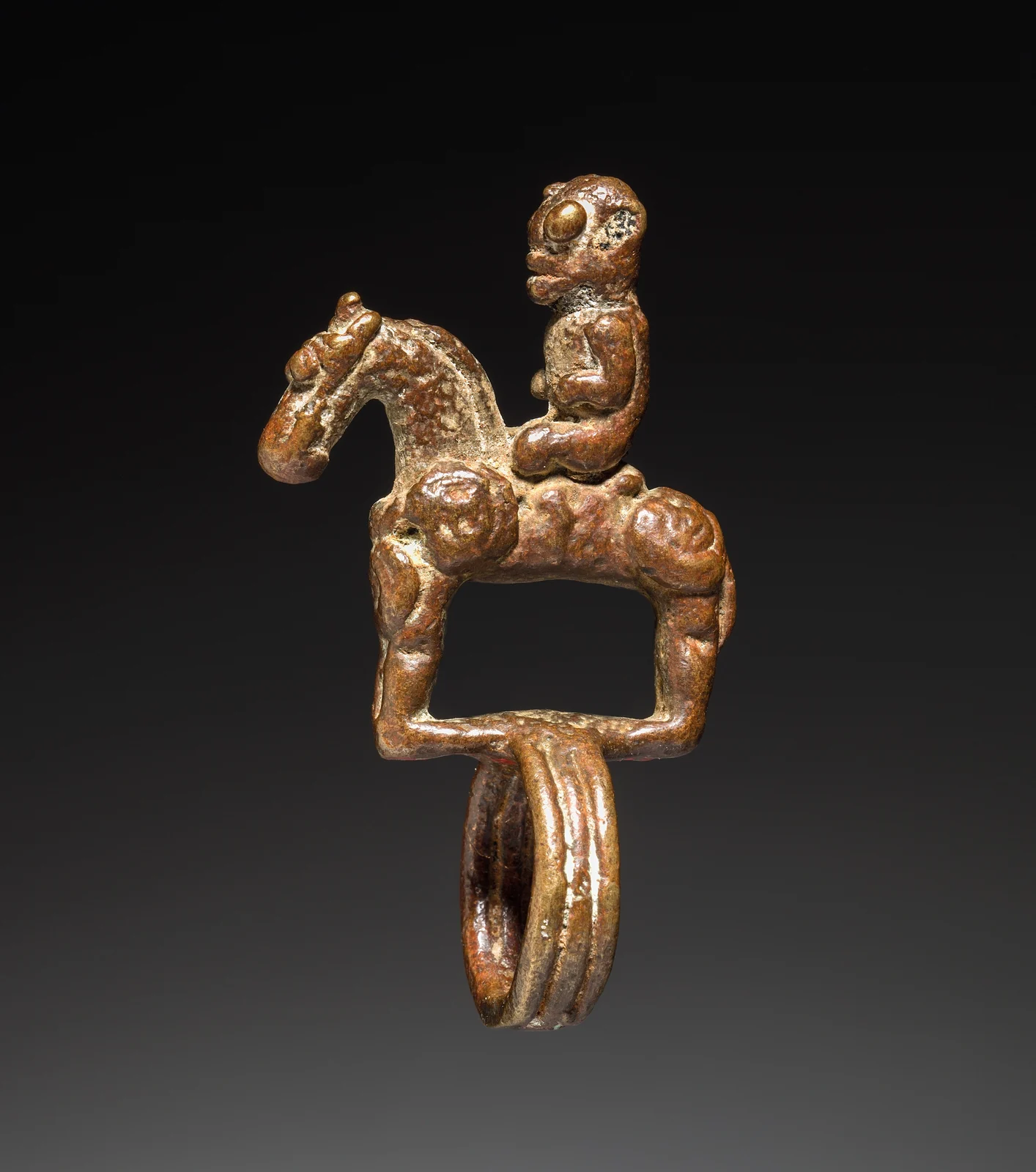
Copper-alloy ring with a small rider on a bridled horse above the ring band, photographed against a dark background.
Ring attributed by the museum to a Dogon-style maker in Mali, before 1975. The museum states it may have belonged to a Hogon; that possibility is not a confirmed ownership history. This object does not represent all Dogon communities.
Overview
UNESCO describes houses and granaries adapted to plateau, cliff and plain settings. Sculpted facade motifs depict successive generations of a couple.
Its heritage account also recognizes movement and changes in building and cultural practice. These communities are living societies, not an unchanged remnant of a single past.
The Menil questions homogeneous museum portraits: “Dogon” groups peoples speaking more than thirty languages, with varied institutions. Specialists question its use as one unified identity.
History & identity
The Menil cites oral histories and archaeology suggesting migration waves in the thirteenth–fifteenth centuries, likely intermixing with earlier inhabitants; no single founding date follows.
Sources & representation
Selected institutional accounts.
Selected bibliography
Documented works and useful reading. This is not a list of every appearance.
- 01
Cliff of Bandiagara (Land of the Dogons) - UNESCO World Heritage Centre
Selected bibliography.
- 02
Introduction - The Menil Collection
Selected bibliography.
Language & cultural connections
Source-supported language and cultural connections have not yet been compiled for this profile.
References
Sources supporting this profile. Linked pages have their own scope and editorial standards.
- Institutional heritage accountCliff of Bandiagara (Land of the Dogons) - UNESCO World Heritage CentreResearch access: 2026-10-07
- Institutional heritage accountIntroduction - The Menil CollectionResearch access: 2026-10-07
Image credits
Specific museum collection objectCopper-alloy ring with a small rider on a bridled horse above the ring band, photographed against a dark background.
Ring attributed by the museum to a Dogon-style maker in Mali, before 1975. The museum states it may have belonged to a Hogon; that possibility is not a confirmed ownership history. This object does not represent all Dogon communities.