
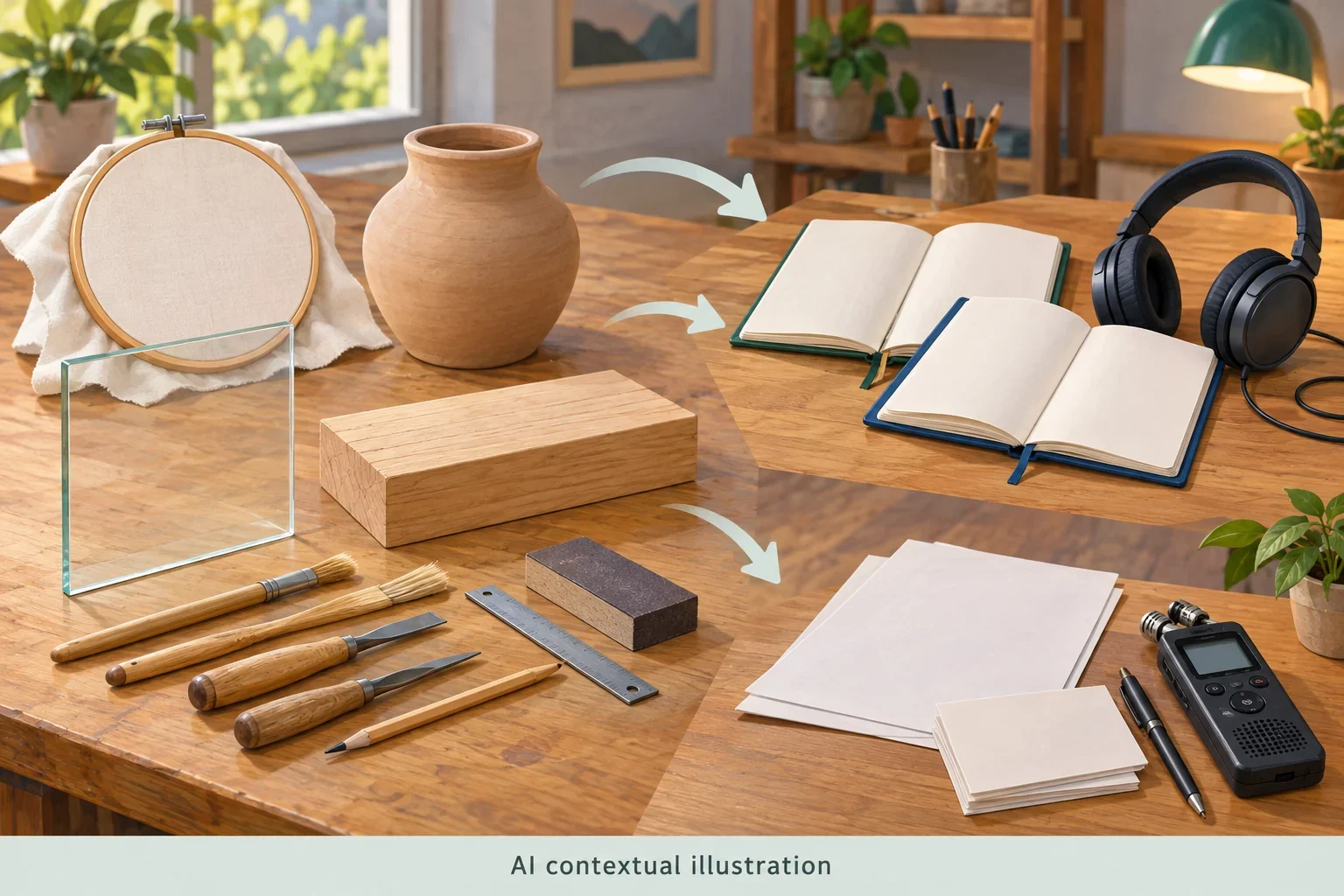
Imagined pathways linking cultural learning and representative work.
Setting, tools and layout imagined; not ethnographic evidence.
Overview
The Mejlis describes its present form as founded in 1991 to represent Crimean Tatar interests. It is elected by and accountable to the Kurultai. Its public account places its leadership in Kyiv since 2014 and includes preserving Crimean Tatar language and culture among its activities; this is the institution’s stated scope, not a claim about every individual’s politics.
UNESCO’s 2021 inscription describes Örnek as meaningful compositions used across several crafts. It records transmission within families and communities, through informal classes and universities. The listing documents cultural knowledge and learning, not permission to invent authentic protective symbols or reduce Crimean Tatar identity to ornament.
History & identity
Living cultural communities; selected institutional accounts.
Sources & representation
Selected public institutional passages retained.
Selected bibliography
Documented works and useful reading. This is not a list of every appearance.
- 01
- 02
Language & cultural connections
Source-supported language and cultural connections have not yet been compiled for this profile.
References
Sources supporting this profile. Linked pages have their own scope and editorial standards.
- Representative institution accountAbout MejlisResearch access: 2026-10-11
- Intangible heritage inscriptionOrnek, a Crimean Tatar ornament and knowledge about itResearch access: 2026-10-11
Image credits
AI contextual interpretationImagined pathways linking cultural learning and representative work.
Setting, tools and layout imagined; not ethnographic evidence.