
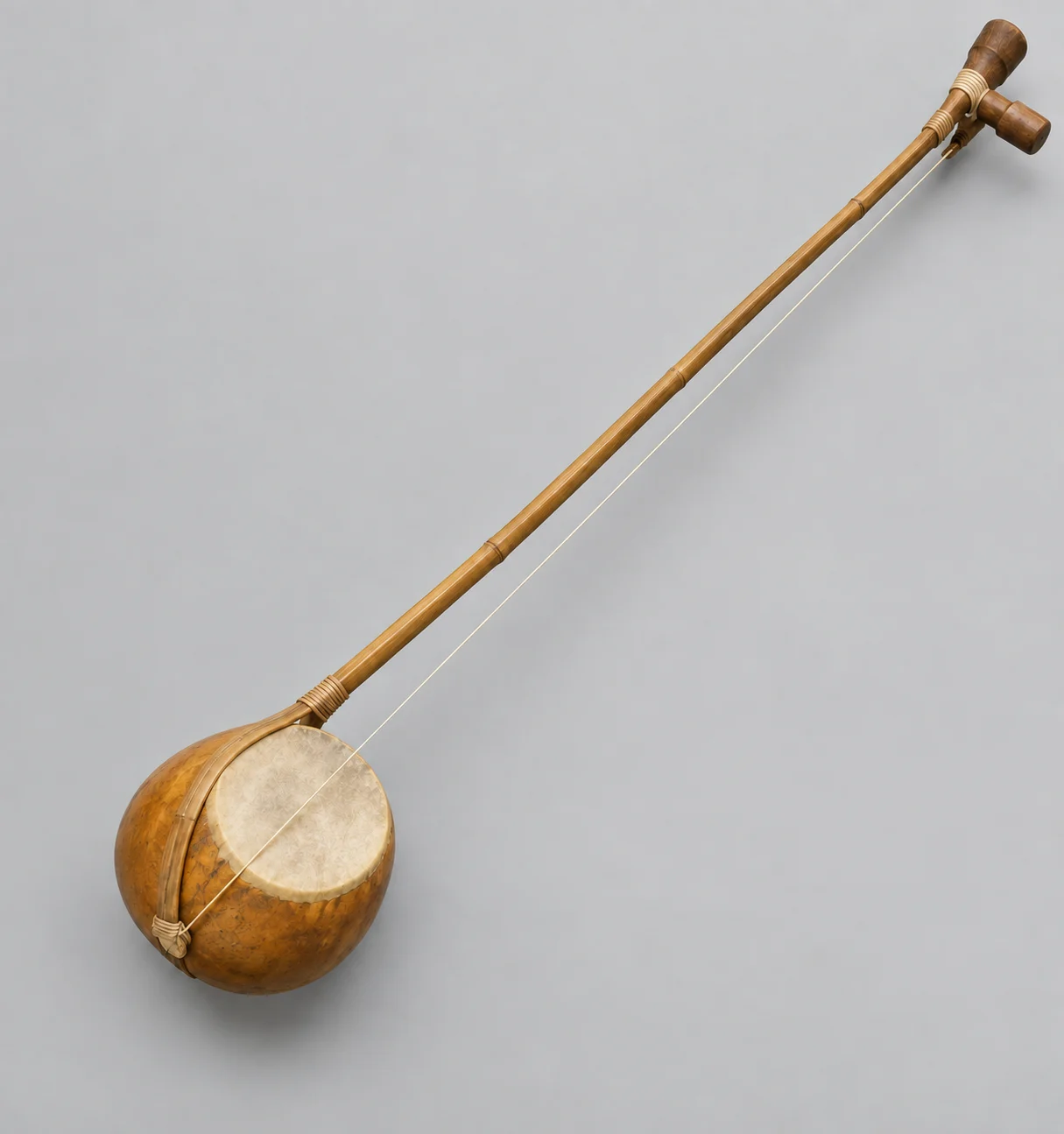
Interpretive gourd-bowl ektara with split-bamboo supports.
AI construction study from Banglapedia's description. Shape and proportions interpreted; this instrument is not exclusive to Bauls. Compressed for display.
Overview
UNESCO identifies Bauls in Bangladesh and West Bengal. Their music and way of life influenced wider Bengali culture, including Tagore’s compositions.
UNESCO describes an oral devotional tradition drawing on Hindu, Buddhist, Vaishnava and Sufi influences. Bauls identify with neither organised religion nor caste; this is a practitioner identity.
Sanatan Siddhashram describes Parvathy Baul’s ashram and gurukul, following her teacher’s vision. It supports teacher-student learning and documenting and carrying forward oral tradition.
History & identity
UNESCO traces Baul songs’ literary attestation to fifteenth-century Bengali writing; this does not establish their origin.
Sources & representation
Selected institutional accounts.
Selected bibliography
Documented works and useful reading. This is not a list of every appearance.
- 01
Baul songs - UNESCO Intangible Cultural Heritage
Selected bibliography.
- 02
ABOUT | Sanatan Siddhashram
Selected bibliography.
Language & cultural connections
Source-supported language and cultural connections have not yet been compiled for this profile.
References
Sources supporting this profile. Linked pages have their own scope and editorial standards.
- Institutional heritage accountBaul songs - UNESCO Intangible Cultural HeritageResearch access: 2026-10-07
- Practitioner-led ashram accountABOUT | Sanatan SiddhashramResearch access: 2026-10-07
Image credits
AI-generated interpretationInterpretive gourd-bowl ektara with split-bamboo supports.
AI construction study from Banglapedia's description. Shape and proportions interpreted; this instrument is not exclusive to Bauls. Compressed for display.