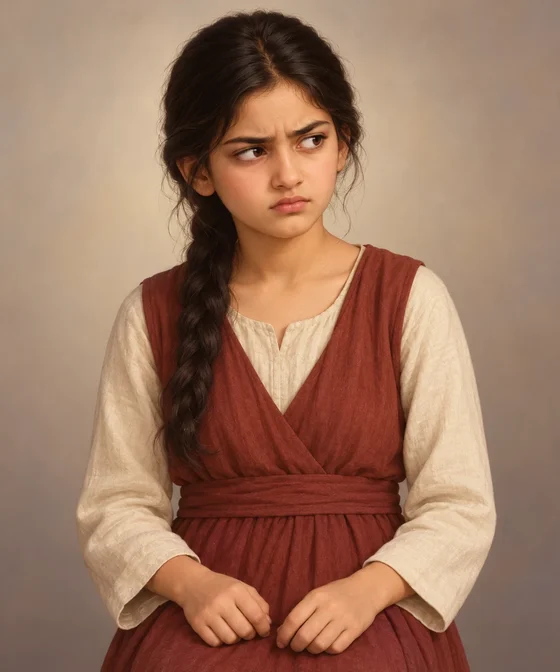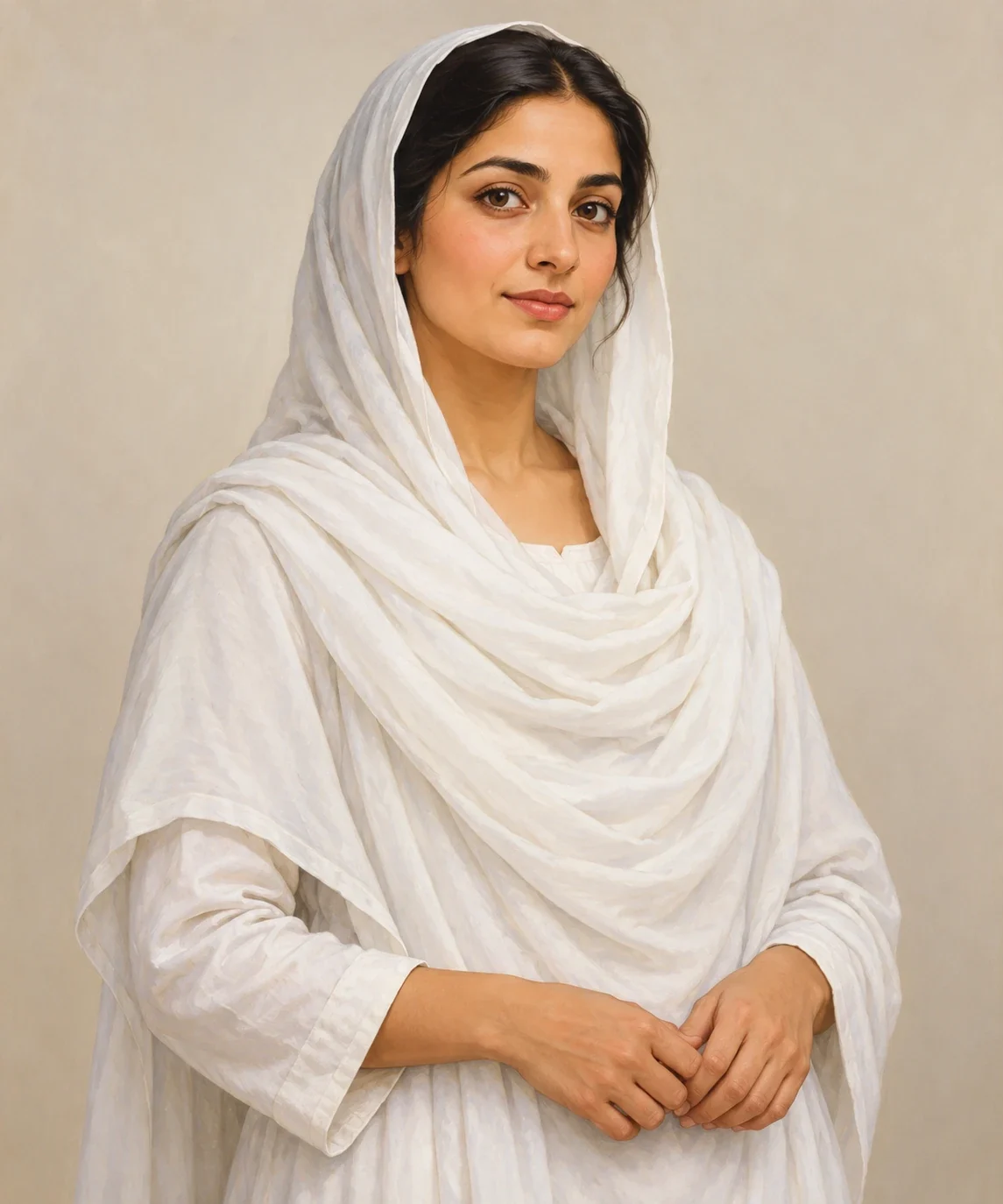
AI-generated interpretation of Steel’s tale; appearance and clothing are imagined.
Overview
The barber’s wife turns a royal gift of waste land into prosperity and repeatedly defeats thieves in Steel’s Punjab tale. Her husband cannot support the household, so she sends him to seek alms from the king. When he returns with land rather than money, she pretends that her grandfather buried treasure there. Seven thieves overhear and dig through the night. Their unsuccessful search leaves the ground ready for sowing, and she borrows seed, raises a fine crop, pays her debt and sells the surplus.
The thieves demand a share because they worked the soil. She refuses, then exploits their attempts to overhear where she keeps her gold. One stolen crock contains filth instead of the expected treasure. Another supposed hiding place sends them into a stinging insect colony; Temple’s note corrects the narrative’s hornets to bees. When they later try to enter through a window, she uses her husband’s razor to cut their noses, keeping the severed tips.
The thieves eventually carry off her bed while she sleeps outside. Waking beneath a banyan tree, she swings into its branches and uses her white veil and singing to pass herself off as a fairy. She mutilates the captain’s tongue, then frightens the band into flight. The pretended fairy is a human woman using disguise, not a supernatural transformation. When the thieves finally sue for their share, she argues her own case and produces the bodily evidence. The king appoints her husband his Wazîr, reasoning that he will remain sensible while she is alive. Her practical intelligence secures the household’s fortune, while the reward is formally bestowed on the husband.
Origins & earliest records
Flora Annie Steel, Tales of the Punjab: Told by the People; notes and analysis by R. C. Temple
Records & interpretation
Complete selected tale, full relevant historical notes and analysis entry, full preface and To the Little Reader read from the university-hosted 1894 transcription.
Selected bibliography
Documented works and useful reading. This is not a list of every appearance.
- 01
Tales of the Punjab: Told by the People
Macmillan and Co., London and New York; edition date from university transcription heading. Selected tale pp. 220–229. No first-publication claim.
Family & connections
A source-supported family tree or inspiration record has not yet been compiled for this profile. Related reading below indicates a connection in subject matter, not a proven lineage or creative influence.
References
Sources supporting this profile. Linked pages have their own scope and editorial standards.
- University-hosted original historical edition transcriptionSteel and Temple, 1894 — complete tale, notes, analysis and framingResearch access: 2026-10-21
Image credits
AI-generated illustrationAI-generated interpretation of Steel’s tale; appearance and clothing are imagined.