
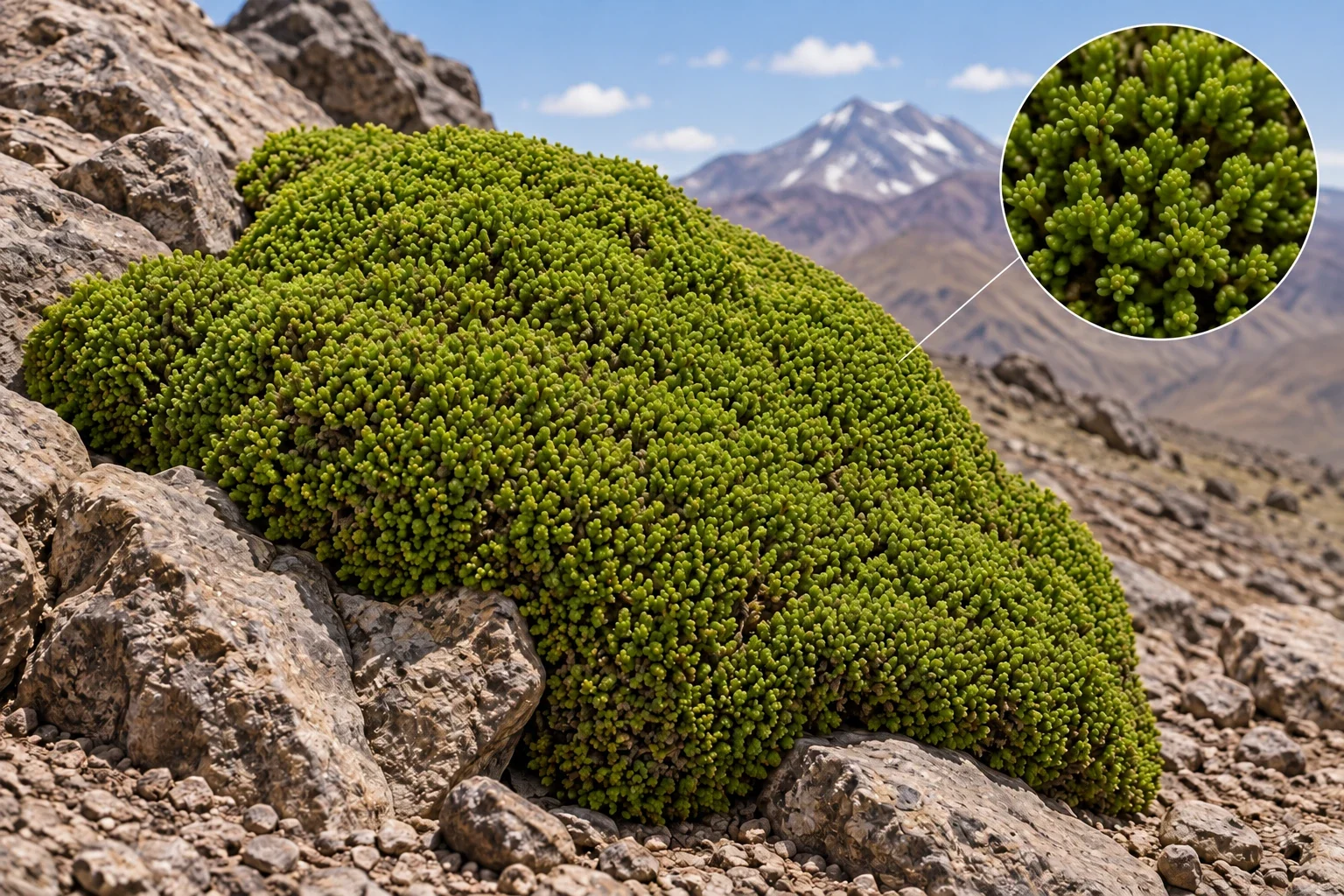
Modern AI interpretation of a woody cushion plant.
Modern AI botanical interpretation; fine stem texture and rocky terrain schematic.
Overview
Azorella compacta is accepted by Kew as a subshrub in Apiaceae, native from southern Peru to northwestern Argentina. Its name was first published in 1891. This taxonomic and geographic account provides identity and broad range; a cushion’s impressive size should not be used to assign an exact age without measurements.
Kleier and colleagues describe dense woody cushions on rocky Altiplano slopes, with tightly crowded small stems producing a bright green surface. Their Lauca National Park study found many small individuals across an elevation gradient, rather than a population composed only of ancient giants. The distinctive growth form belongs to a flowering plant, not a moss-covered boulder.
Relocated cushions marked fourteen years earlier showed variable growth or shrinkage. The authors also recorded a northerly orientation and an elevation of 5,250 metres. These are measurements from the Chilean study, not universal growth rates or global elevation limits. Size-based age estimates and regional population conclusions remain conditional on sampling.
Origins & earliest records
Philippi’s name was published in 1891; modern growth studies do not directly date the species’ origin.
Evidence & interpretation
Retained scientific and institutional passages.
Selected bibliography
Documented works and useful reading. This is not a list of every appearance.
- 01
- 02
Family & connections
A source-supported family tree or inspiration record has not yet been compiled for this profile. Related reading below indicates a connection in subject matter, not a proven lineage or creative influence.
Look for a taxonomic record and classified relativesReferences
Sources supporting this profile. Linked pages have their own scope and editorial standards.
- Botanical taxonomic databaseAzorella compactaResearch access: 2026-10-11
- Primary ecological study; retained indexed passageCushion growth and orientationResearch access: 2026-10-11
Image credits
Modern scientific interpretationModern AI interpretation of a woody cushion plant.
Modern AI botanical interpretation; fine stem texture and rocky terrain schematic.