
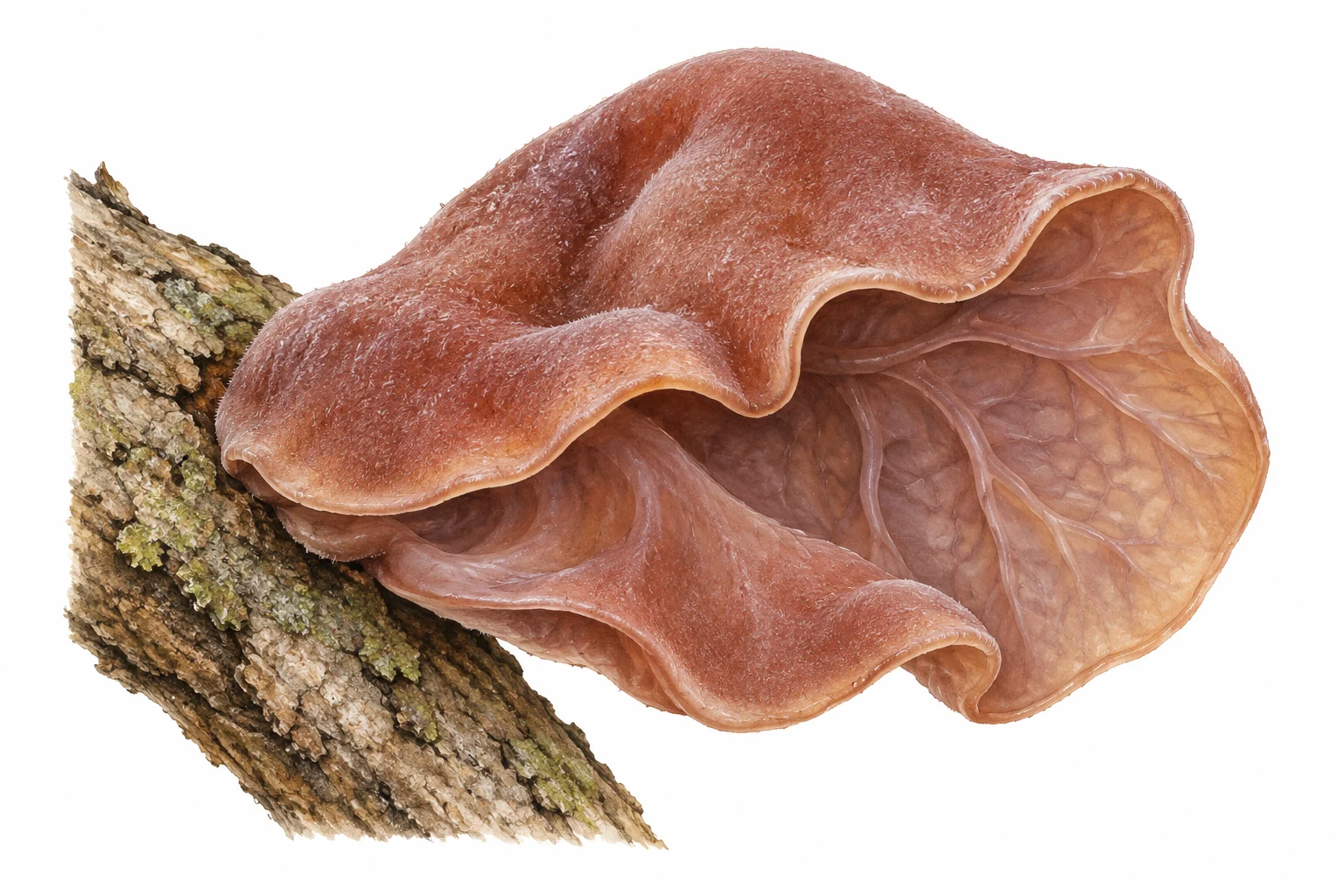
AI-generated fruiting-body study.
Interpretation; not an exact specimen.
Overview
Jelly ear develops from a small cup into a tough, ear-shaped fruiting body attached to wood along one edge. Its upper surface bears fine down, while the fertile underside can be smooth or veined. Pinkish and purplish browns are typical, although individual fruiting bodies vary considerably in colour.
This fungus grows on the wood of deciduous trees and shrubs, especially elder, and may be encountered throughout the year. Dry fruiting bodies darken and become horn-like, then recover their shape after wetting. Young cups can resemble Peziza fungi; their tougher texture and the position of the fertile surface provide useful distinctions.
Origins & earliest records
Deciduous wood
Evidence & interpretation
Published account.
Selected bibliography
Documented works and useful reading. This is not a list of every appearance.
- 01
Family & connections
A source-supported family tree or inspiration record has not yet been compiled for this profile. Related reading below indicates a connection in subject matter, not a proven lineage or creative influence.
Look for a taxonomic record and classified relativesReferences
Sources supporting this profile. Linked pages have their own scope and editorial standards.
- Species accountJelly Ear FungusResearch access: 2026-10-18
Image credits
AI-generated illustrationAI-generated fruiting-body study.
Interpretation; not an exact specimen.