
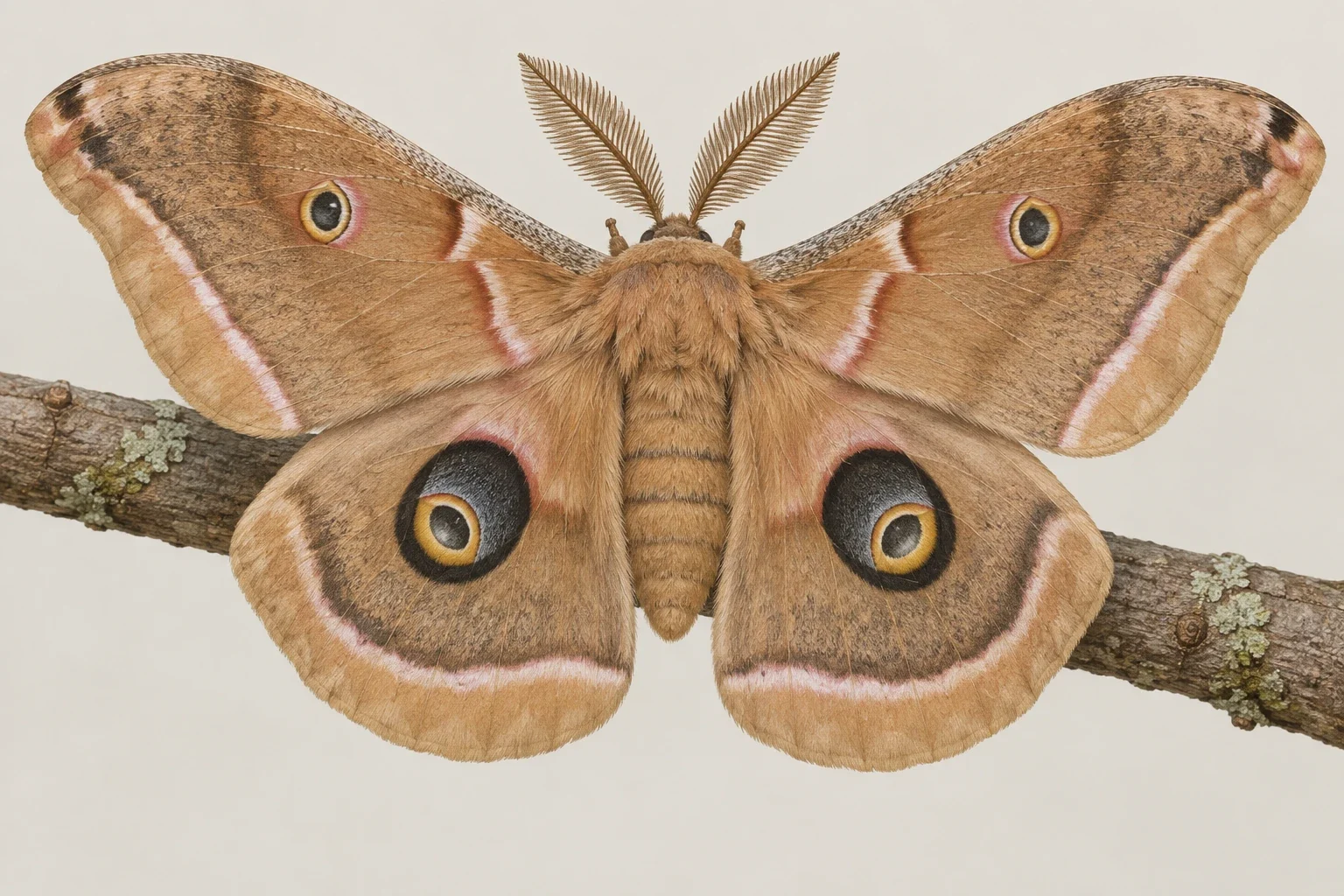
Modern AI interpretation of male polyphemus moth.
Modern AI interpretation of a male moth; fine wing patterns and antenna branching are schematic.
Overview
The University of Florida account describes Antheraea polyphemus adults with variable reddish, grey or yellow-brown wings. Each hindwing carries a conspicuous ringed eyespot, while males have larger comb-like antennae than females. The older genus name Telea appears in its nomenclatural history. An eyespot is a wing marking rather than a functional eye or a fixed guarantee that predators will retreat.
Missouri's account records small forewing eyespots, translucent green caterpillars and larval feeding on numerous trees and shrubs, including oak, birch and maple. Adults do not eat. Their oval silk cocoons are often wrapped in host leaves and may fall with those leaves or remain attached through winter. Seasonal timing and brood counts vary with locality, so the Missouri flight season is not a worldwide calendar. A separate generic pollination sentence in the field page conflicts with its non-feeding description and is excluded.
Origins & earliest records
Its name refers to the mythic cyclops; this etymology does not date biological ancestry.
Evidence & interpretation
Retained scientific and institutional passages.
Selected bibliography
Documented works and useful reading. This is not a list of every appearance.
- 01
- 02
Family & connections
A source-supported family tree or inspiration record has not yet been compiled for this profile. Related reading below indicates a connection in subject matter, not a proven lineage or creative influence.
Look for a taxonomic record and classified relativesReferences
Sources supporting this profile. Linked pages have their own scope and editorial standards.
- University observational species accountPolyphemus moth university accountResearch access: 2026-10-12
- Institutional field accountPolyphemus moth field accountResearch access: 2026-10-12
Image credits
Modern scientific interpretationModern AI interpretation of male polyphemus moth.
Modern AI interpretation of a male moth; fine wing patterns and antenna branching are schematic.