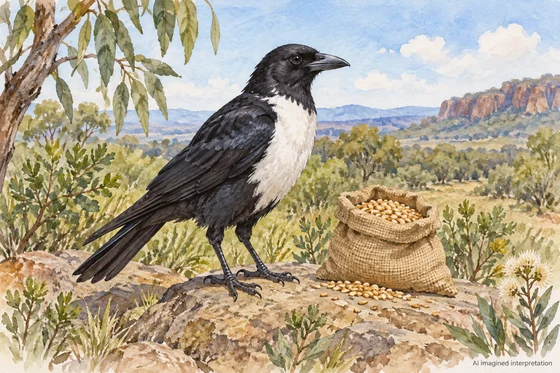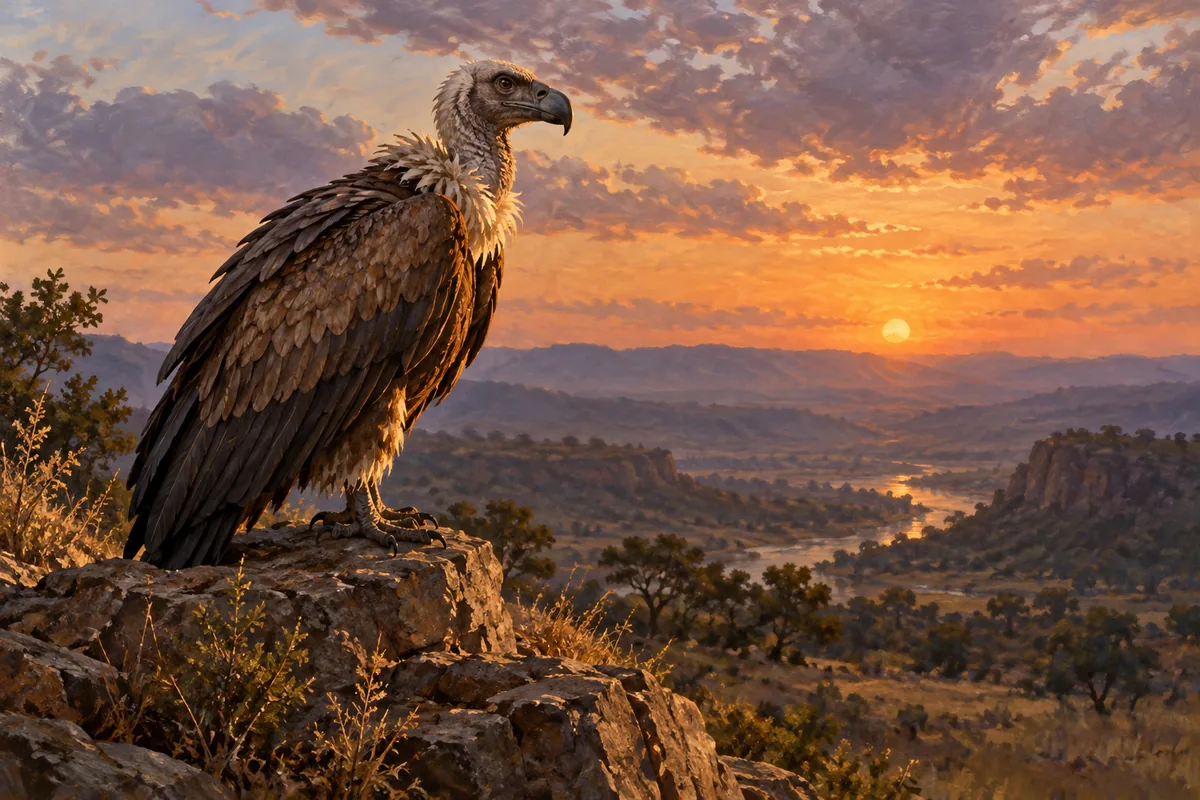
AI interpretation of Angulu. One complete ordinary imagined vulture perched quietly, representing Angulu's attested vulture association as an animal-symbol editorial interpretation. NO dancer, rite, offering or claim of literal bird transformation; no modern vulture species. Form and setting imagined.
AI-generated unofficial original narrative interpretation. Selected scene: One complete ordinary imagined vulture perched quietly, representing Angulu's attested vulture association as an animal-symbol editorial interpretation. NO dancer, rite, offering or claim of literal bird transformation; no modern vulture species. Form and setting imagined. Fine anatomy, garments, objects and setting are modern AI imagined visual details, not an historical reconstruction, community portrait, authentic artifact or evidence of living practice.
Overview
Angulu is the vulture spirit in Tremearne’s account. The report attributes unpleasant bodily smell to her and associates offerings with fowls resembling her colour. It does not supply a precise vulture species or a separate transformation from a human into a bird.
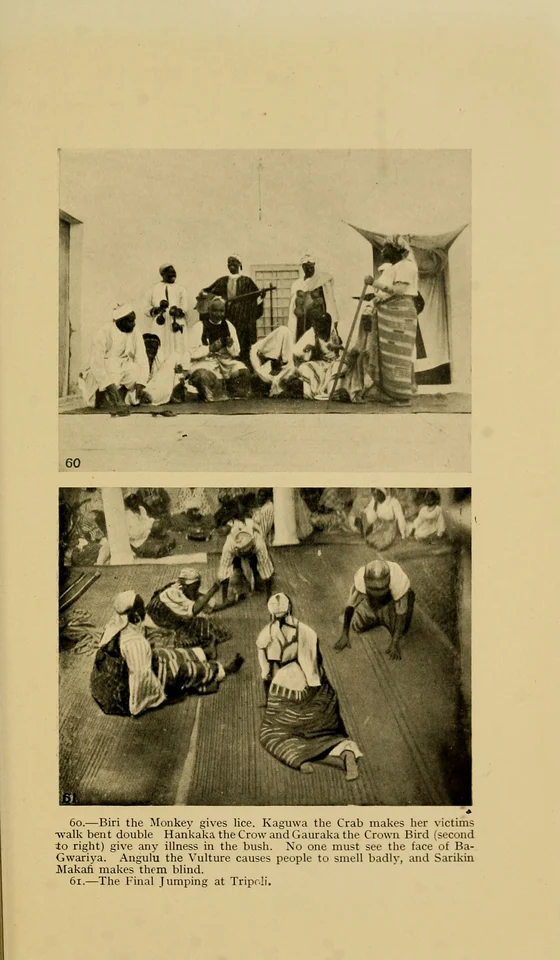
Her representative squats, flaps the arms like wings and makes appropriate bird noises. The song concerns meat left until it smells, linking the performed bird character with the odour association. Hankaka and Gauraka are said to use similar movements in the following notices, but remain separately named crow and crown-bird roles. The small amount of evidence is retained without enlarging it into an invented feeding episode.
Origins & earliest records
A. J. N. Tremearne combines interviews and descriptions of bori performances with comparative interpretation. These selected notices do not consistently name individual speakers; printed attributes are distinguished from his conjectures.
Records & interpretation
Complete selected spirit notice in chapter XXVIII, printed pp. 389–390; adjoining chapter context read.
Selected bibliography
Documented works and useful reading. This is not a list of every appearance.
- 01
The Ban of the Bori: Demons and Demon-Dancing in West and North Africa
XXVIII. Spirits of the Forest, Waters and Grove, pp. 389–390; ritual representation and attributed explanation.
Family & connections
A source-supported family tree or inspiration record has not yet been compiled for this profile. Related reading below indicates a connection in subject matter, not a proven lineage or creative influence.
References
Sources supporting this profile. Linked pages have their own scope and editorial standards.
- Digitized historical ethnographic accountTremearne — AnguluResearch access: 2026-10-05
Image credits
AI-generated interpretationAI interpretation of Angulu. One complete ordinary imagined vulture perched quietly, representing Angulu's attested vulture association as an animal-symbol editorial interpretation. NO dancer, rite, offering or claim of literal bird transformation; no modern vulture species. Form and setting imagined.
AI-generated unofficial original narrative interpretation. Selected scene: One complete ordinary imagined vulture perched quietly, representing Angulu's attested vulture association as an animal-symbol editorial interpretation. NO dancer, rite, offering or claim of literal bird transformation; no modern vulture species. Form and setting imagined. Fine anatomy, garments, objects and setting are modern AI imagined visual details, not an historical reconstruction, community portrait, authentic artifact or evidence of living practice.