
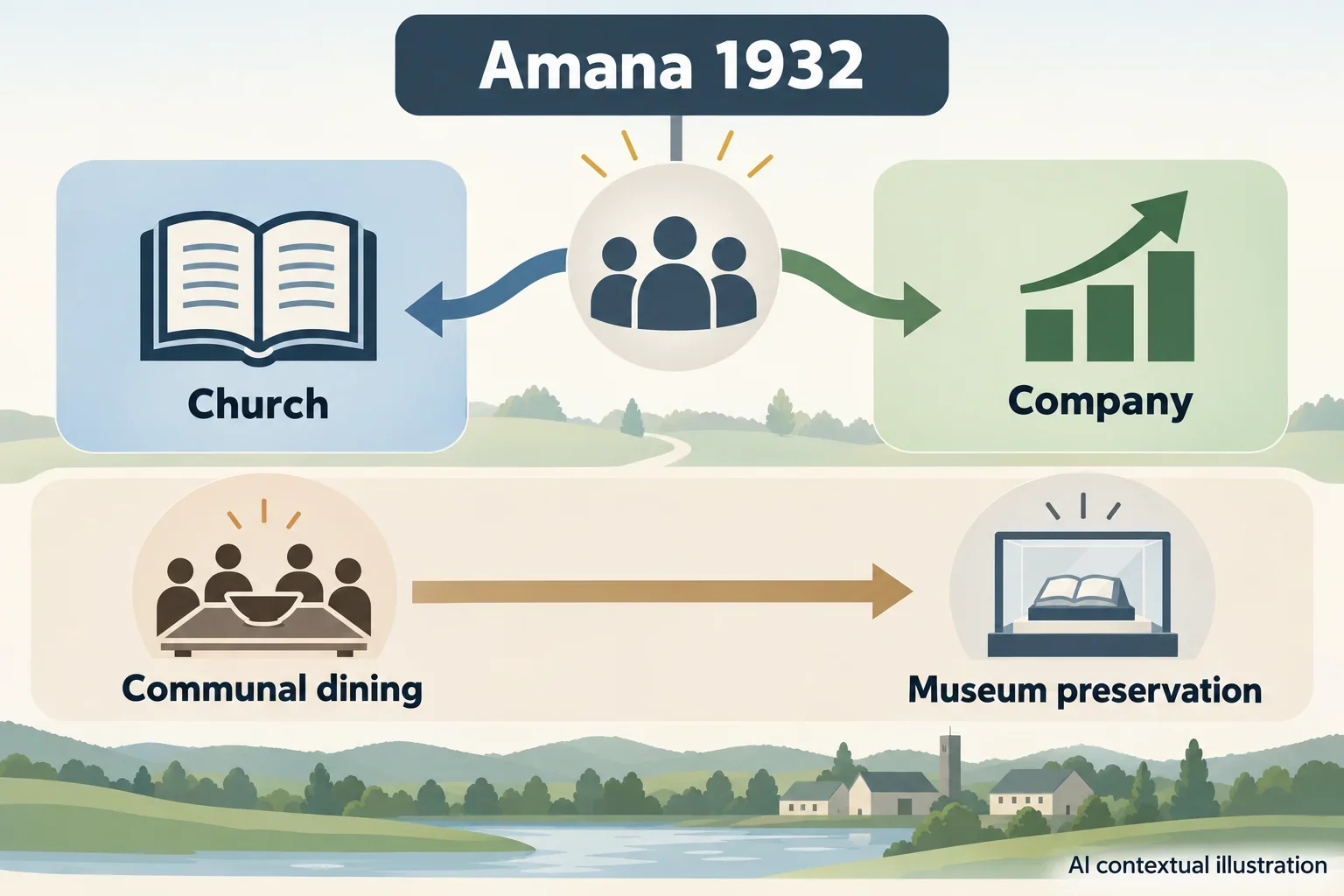
AI diagram of Amana's 1932 reorganization and communal-dining heritage
AI contextual illustration. Diagram glyphs and scenery imagined; not ethnographic evidence.
Overview
The National Park Service’s 2017 account describes the Great Change of 1932: members retained their church while separating economic activity into a joint-stock company. Social pressures and economic setbacks shaped the decision. The end of communal organization did not mean the disappearance of the community or its faith.
The Heritage Society describes an 1863 communal kitchen serving assigned groups rather than individual family cooking. The Ruedy family preserved its final communal-era arrangement and opened a museum in the 1950s. Later restoration extended public access in 2022, connecting daily-life history with community preservation.
History & identity
Selected communal-era and later heritage accounts.
Sources & representation
Selected public institutional passages retained.
Selected bibliography
Documented works and useful reading. This is not a list of every appearance.
- 01
- 02
Language & cultural connections
Source-supported language and cultural connections have not yet been compiled for this profile.
References
Sources supporting this profile. Linked pages have their own scope and editorial standards.
- Federal historical community accountAmana Colonies TodayResearch access: 2026-10-12
- Community heritage museum accountCommunal KitchenResearch access: 2026-10-12
Image credits
AI contextual interpretationAI diagram of Amana's 1932 reorganization and communal-dining heritage
AI contextual illustration. Diagram glyphs and scenery imagined; not ethnographic evidence.