
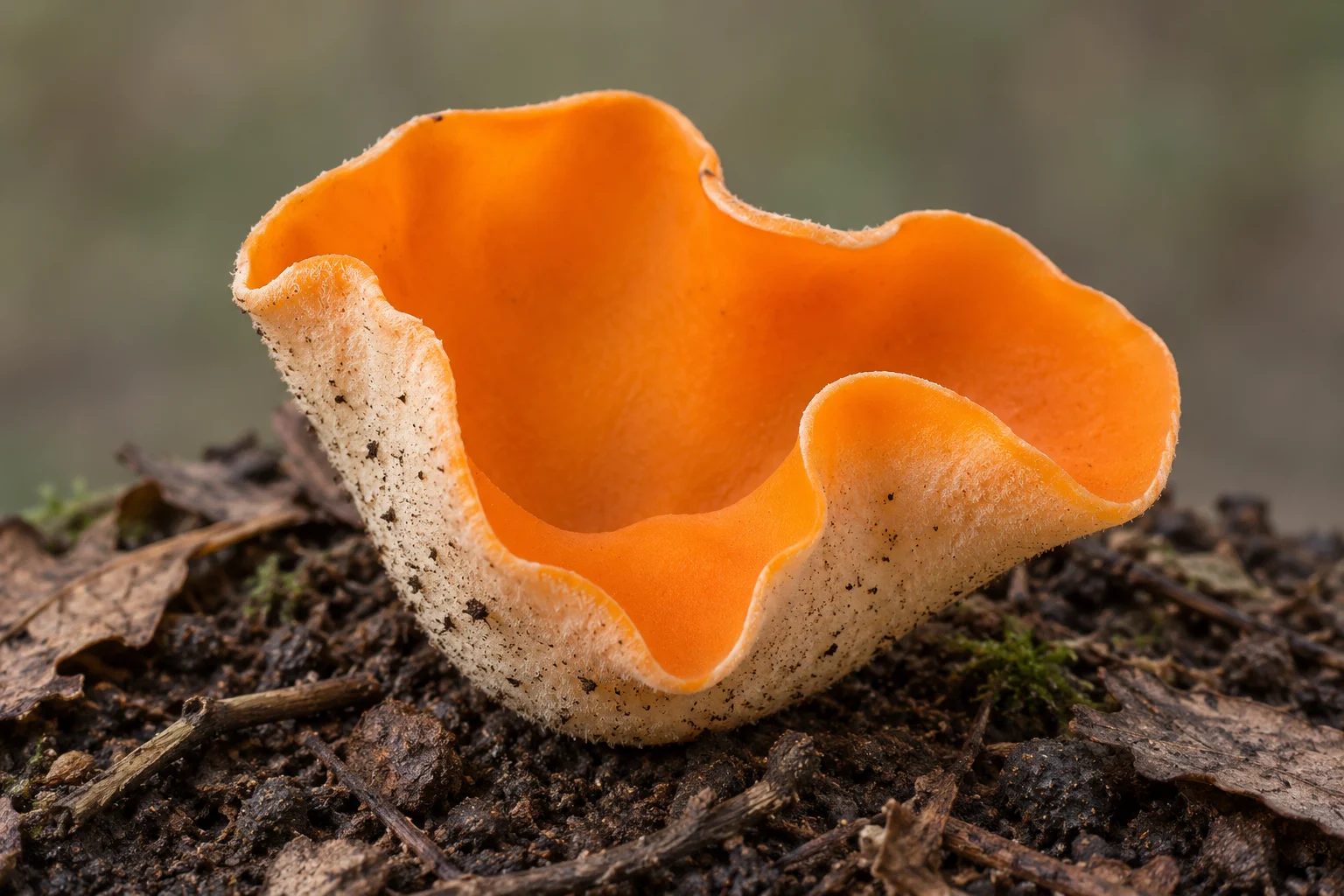
AI-generated fruiting-body study.
Independent interpretation; underground structures are not reconstructed.
Overview
Orange peel fungus produces orange, stalkless cups that often grow together. Their surfaces fold into irregular, peel-like forms as they develop. The pale underside carries fine woolly white flecks, contrasting with the orange inner surface shown in the photographic reference. These visible cups are fungal fruiting bodies.
The species favours disturbed soil, including pathsides and road edges in parks, gardens, cemeteries and woodland. NatureSpot gives September to January as its regional viewing season, supported by dated community photographs including Leicester Botanical Gardens in October 2013. These records document occurrence without defining an exclusive global range.
Origins & earliest records
Regional UK records.
Evidence & interpretation
Community records and photographs.
Selected bibliography
Documented works and useful reading. This is not a list of every appearance.
- 01
- 02
- 03
Family & connections
A source-supported family tree or inspiration record has not yet been compiled for this profile. Related reading below indicates a connection in subject matter, not a proven lineage or creative influence.
Look for a taxonomic record and classified relativesReferences
Sources supporting this profile. Linked pages have their own scope and editorial standards.
- Community species accountOrange Peel FungusResearch access: 2026-10-18
- Botanical garden articleFestive FungiResearch access: 2026-10-18
- Personal photographic recordOrange peal fungusResearch access: 2026-10-18
Image credits
AI-generated illustrationAI-generated fruiting-body study.
Independent interpretation; underground structures are not reconstructed.